
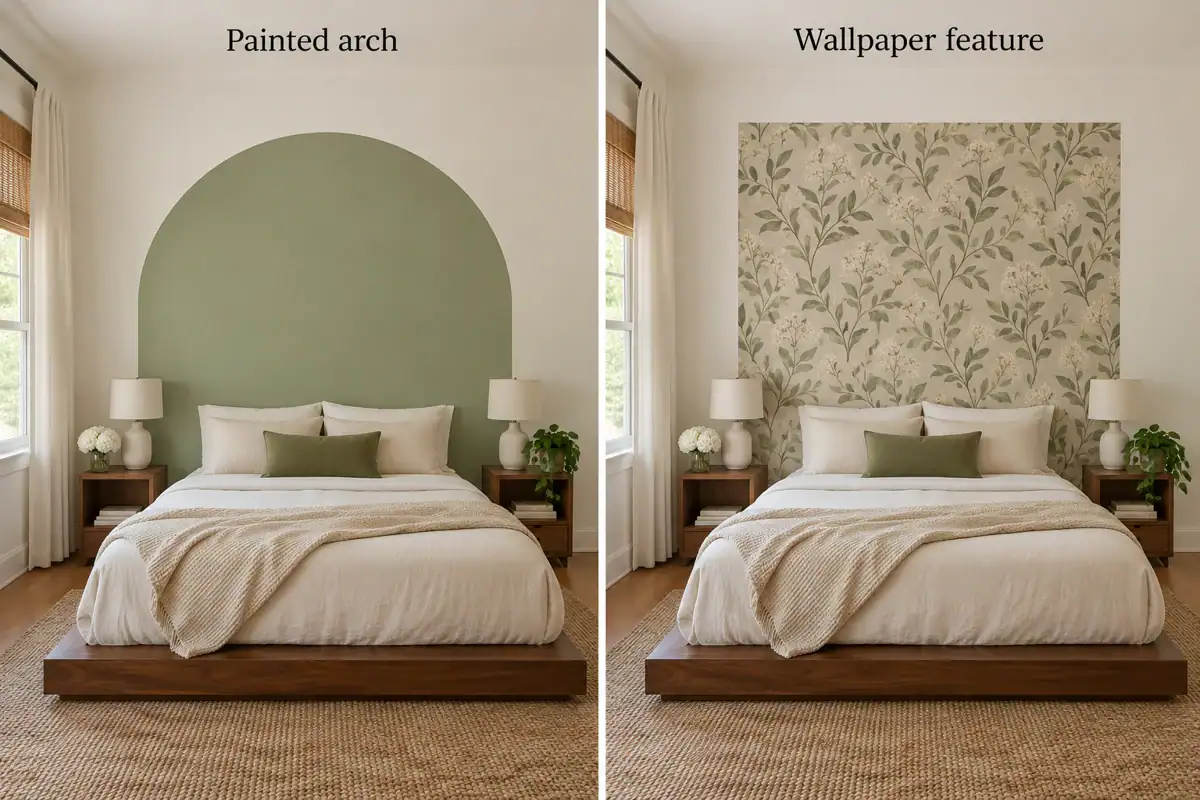
You can replace the look of a headboard with paint, wallpaper, curtains, lightweight artwork or a textile backdrop. If you also want a comfortable place to sit up, compare a suitable reading wedge, padded panel or purpose-built backrest. Wall decoration alone does not add cushioning or support.
The 30 ideas below range from simple changes to mounting projects. Start with what you need the headboard to do, whether you can alter the wall, and how much space you can spare. Keep the bed frame fully assembled with every support its manufacturer requires.
Jump to renter-friendly options, ideas for small rooms, or reading comfort.
Choose a Headboard Alternative by What You Need
| Your priority | Options to compare | Effort and mounting check | Back support? |
|---|---|---|---|
| A visual change with little added depth | Painted arch, accent wall or suitable decals | Usually lower effort; paint permission or surface compatibility still matters. | No |
| A removable-looking wall treatment | Peel-and-stick wallpaper | Test the exact product; removal and wall damage depend on the surface. | No |
| A soft decorative backdrop | Curtains or a lightweight textile | Needs a suitable hanging system and space clear of lamps and pillows. | No |
| Comfort for reading | A suitable reading wedge on the mattress | Check fit, cover care and intended use; it occupies mattress space. | Yes, when designed for that use |
| A headboard-like padded surface | Purpose-built upholstered panels | Check wall compatibility, fixing method and whether leaning is permitted. | Only if specified by the maker |
| A shelf above the bed | Shallow wall-mounted shelf | Check mounting, head clearance and load limits. Keep heavy items beside the bed. | No |
| A substantial vintage feature | Repurposed door or shutters | Higher effort; assess condition, weight and attachment before refinishing. | Do not assume so |
Measure the Bed and Wall Before Choosing
Measure the outside bed width, the wall area and the space behind the mattress. Sit up on the bed to check where your head and pillows reach. Use removable tape or a paper template to judge the proposed feature before installing it; test tape on an inconspicuous area first.
The finished mattress height matters as much as the wall feature’s height. If the setup feels awkward to get into, our guide to lowering a bed explains the components to measure. A decorative alternative should not require removing structural parts from the frame.
Wall-Mounted Shelving Above the Bed
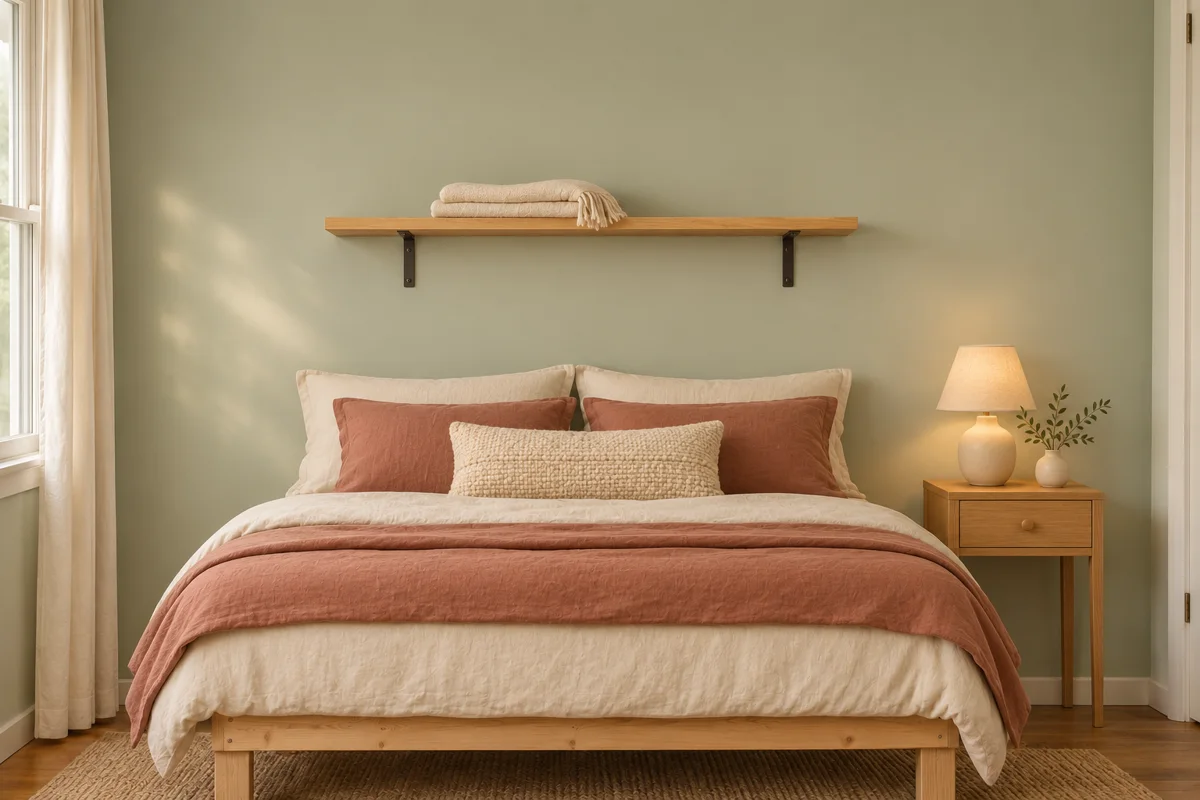
Center a shallow shelf over the bed to create a horizontal line where a headboard would normally draw the eye. You can buy a ready-to-mount shelf or pair a finished board with compatible brackets. Mark the outline with painter’s tape first and check the clearance while sitting upright in bed.
Use hardware rated for the shelf, the wall and the intended load. Keep books, glass and heavy objects on a shelf beside the bed. Above the pillows, leave the shelf empty or style it with lightweight, soft items.
Neutral Wall with a Statement Art Piece Placed Above the Bed
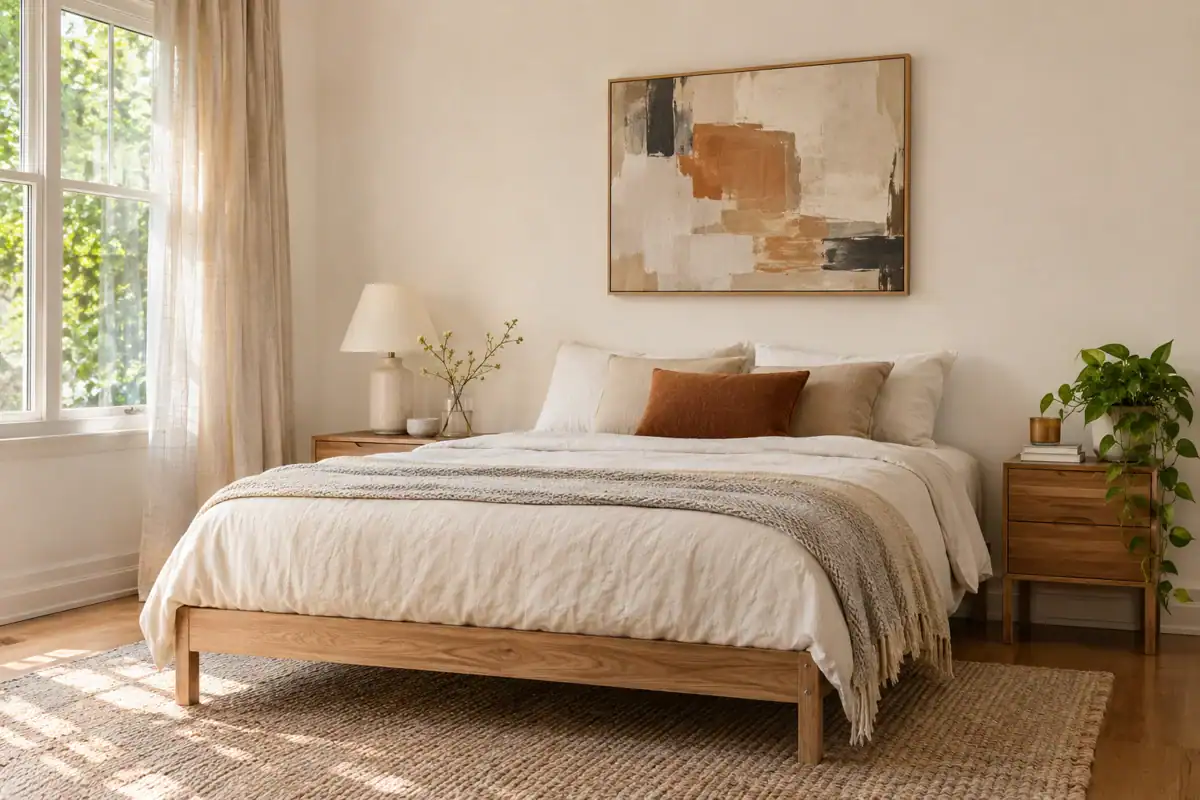
One well-chosen piece can make the bed feel like the room’s focal point without a headboard. Start with the style, color and available wall area, then check how the piece looks from the doorway and while seated in bed. Lightweight artwork is easier to plan around than a large glass-fronted frame.
Use a mounting method intended for the object, wall and location. Do not assume adhesive strips are suitable above a sleeping area: Command’s picture-hanging strip instructions explicitly exclude hanging over beds. If you cannot mount the piece appropriately, put it on a side wall and use paint behind the bed.
Mirrors
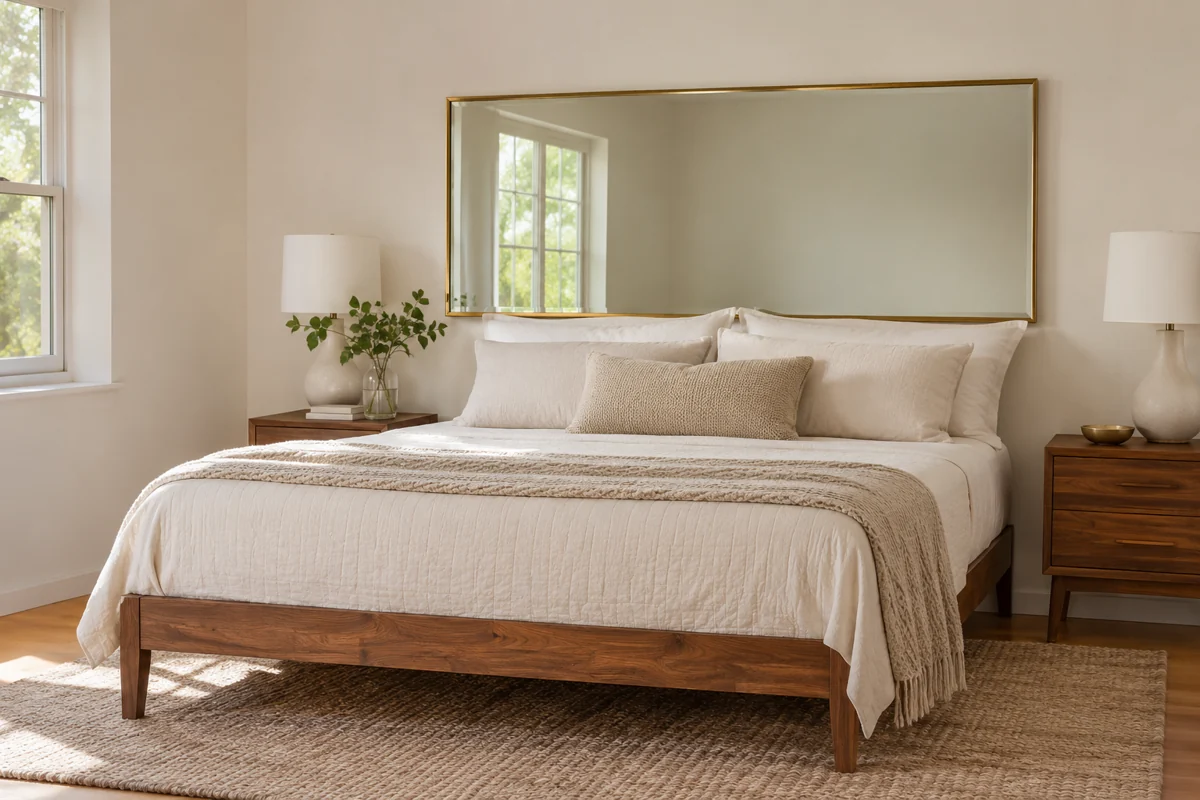
A mirror centered on the wall directly behind the bed can act as a decorative headboard feature. A wide horizontal mirror or a coordinated group of mirror panels creates a different effect from a mirror elsewhere in the room. Check the reflection from the doorway and from the mattress before choosing its position.
Use a mirror and installation system suitable for this location, its weight and the wall construction. Have a qualified installer assess a large or heavy mirror; do not prop it loose behind the mattress or use adhesive picture strips above the bed. Leave clearance so a seated person, pillows and a moving frame do not strike the glass. This is a visual feature, not a backrest.
Create an Accent Wall
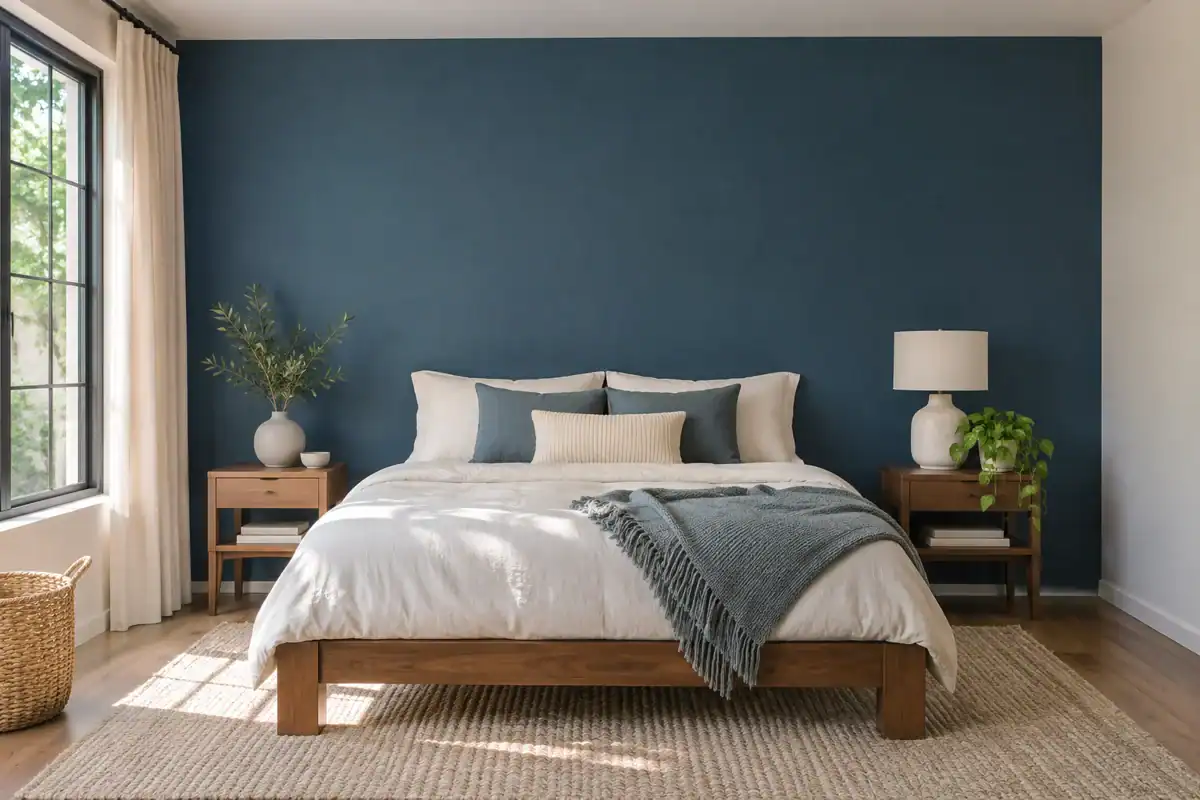
A single-color wall is one of the simplest ways to define the space behind a bed. Choose a shade already present in the bedding, rug or curtains, or use a muted contrasting color. This keeps the wall feature coordinated without needing another piece of furniture.
An accent wall works especially well when the room is too small for a thick headboard. Check paint permission in a rental and plan for preparation and repainting. It gives a visual backdrop, not a surface designed for leaning.
Place Your Bed Below a Window

A window can frame a headboard-free bed if the room already suits that arrangement. Check the sill height, drafts, curtain movement and whether you can still reach and operate the window. The mattress should not press into handles, glass or window treatments.
Keep window exits and required access clear, and do not place bedding against heaters or other heat sources. Keep blind cords out of reach and away from the bed. If the arrangement creates obstructions or uncomfortable drafts, choose another wall rather than forcing the layout.
A Lightweight Woven Wall Hanging
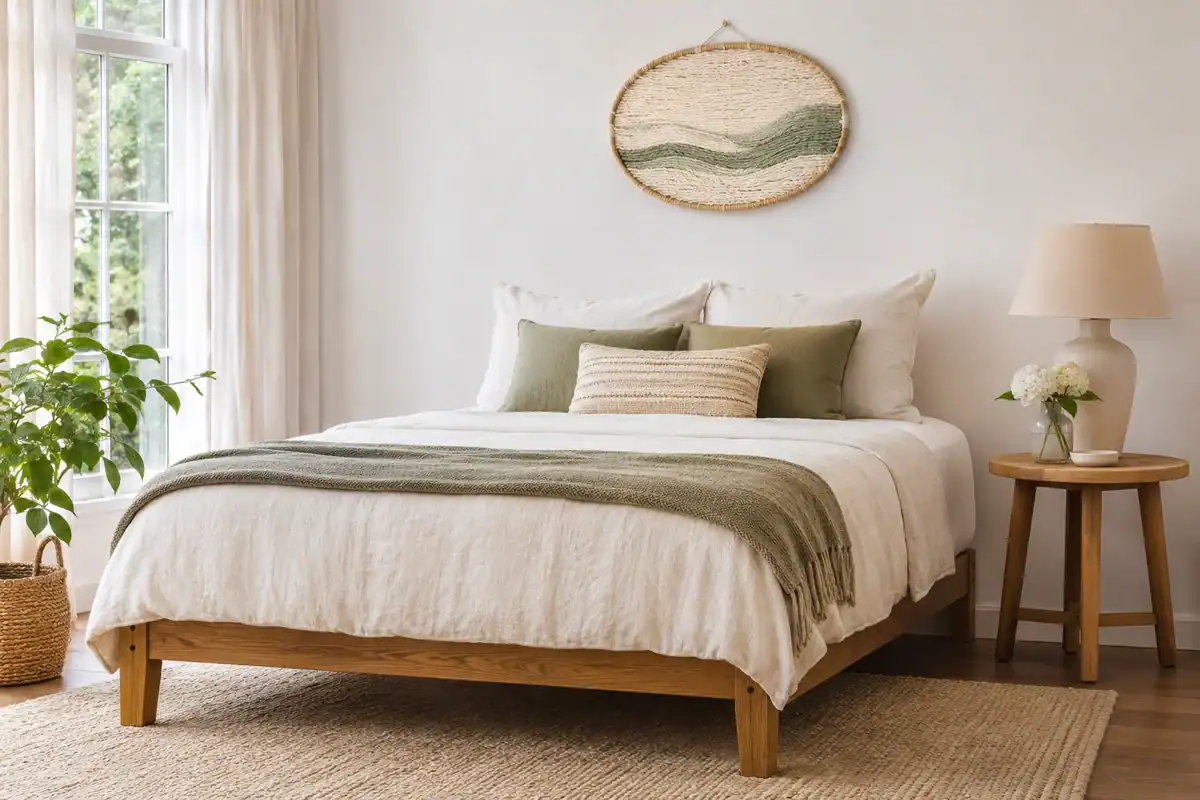
A woven hoop, small textile or simple fiber-art piece adds texture without the visual weight of timber. Pick one with a scale that suits the bed and enough clearance that it will not brush against your head when seated.
Check the whole hanging system, including the rod or hoop, rather than judging only the fabric’s weight. Avoid long loose strands around pillows and lamps. This is a decorative option, so add suitable pillows if you want to sit up to read.
Mural or Wallpaper
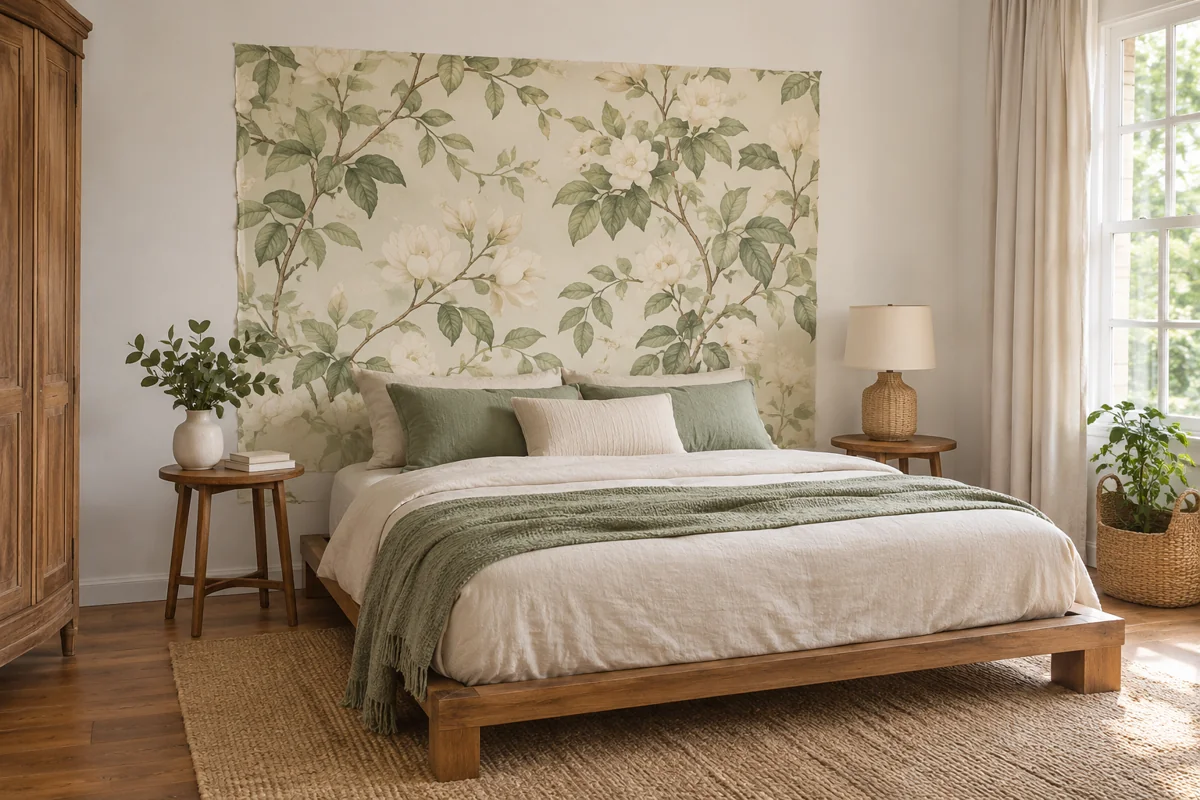
A mural or wallpaper panel can give the bed a clear boundary without taking up floor space. A rectangle behind the mattress is an alternative to covering the whole room; line up the pattern before cutting and allow for pattern matching when calculating how much to buy.
Removable does not mean suitable for every rental wall. Test the exact product and follow its preparation and removal directions. Tempaper’s installation guide, for example, specifies compatible smooth painted surfaces, allows paint to cure first and lists textured surfaces among those not recommended.
A Curtain Backdrop
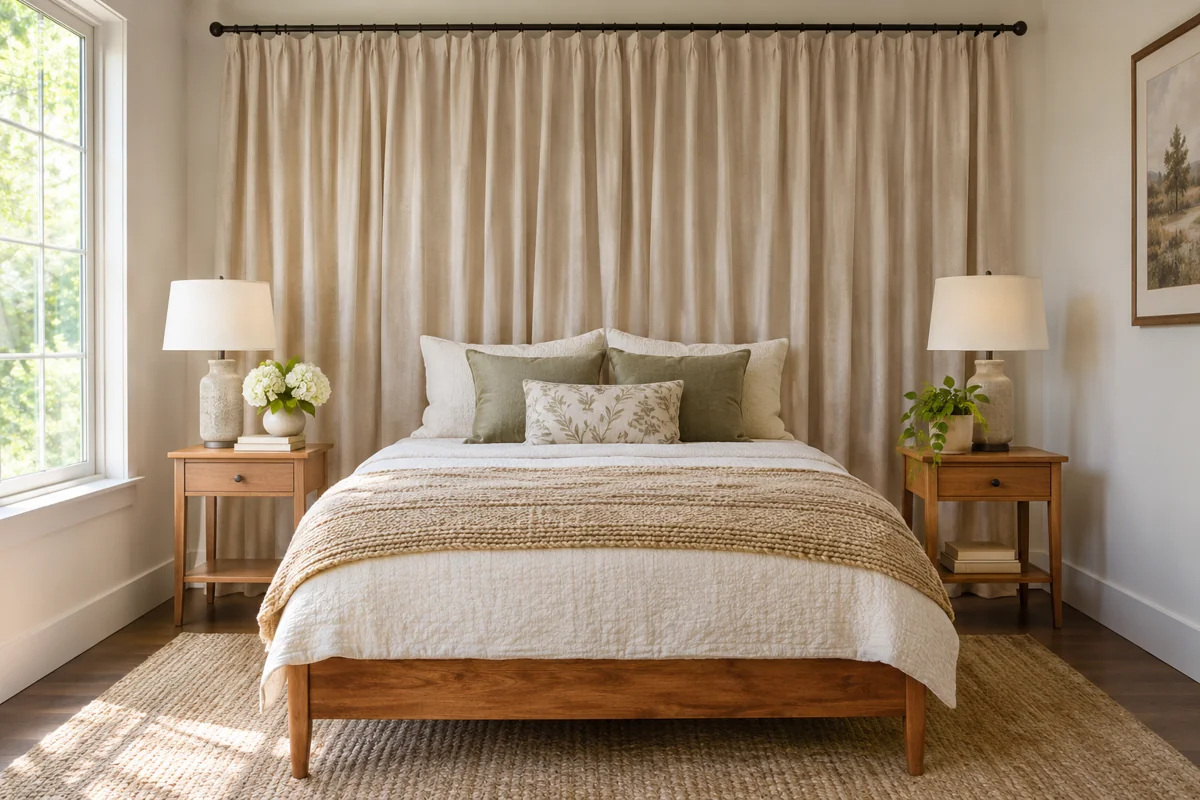
Hang curtains behind the bed to create a soft, full-height backdrop, even where there is no window. A simple plain fabric keeps the effect calm; heavier folds create more visual depth. Check the space taken up by the rod, brackets and fabric before moving the bed.
Use a properly supported curtain system and keep fabric away from lamps, heaters, outlets in use and floor vents. Do not rely on an improvised tension rod above the sleeping area. This option needs room for the fabric and regular cleaning, but does not add a rigid board behind the mattress.
Upholstered Wall Panels
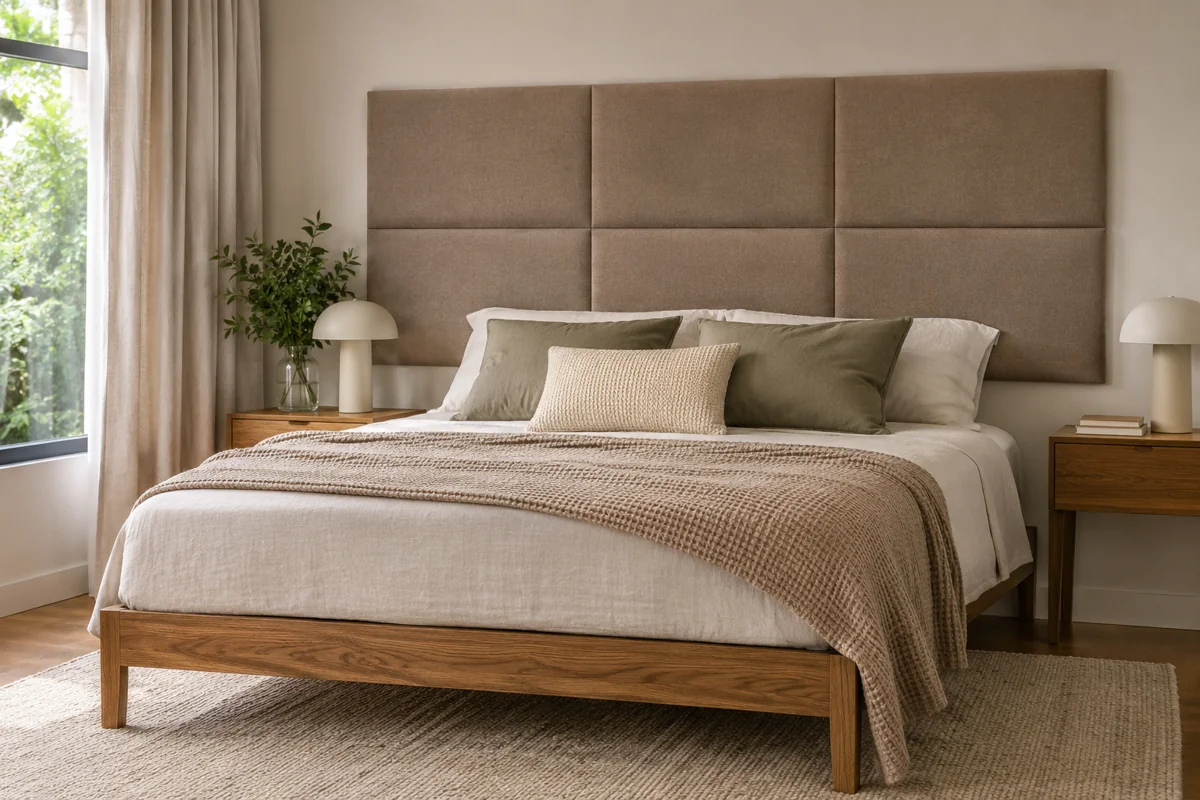
Padded panels can give the look and feel of a headboard while letting you choose the overall width and arrangement. They may suit someone who wants a soft surface behind the pillows without a bulky furniture piece.
Choose panels and a fixing method intended for this location and use. Adhesive attachment is not automatically appropriate for every wall or for repeated leaning. Check whether the maker permits the use you want, and include the installation hardware in your comparison. A panel designed only as decoration should not be treated as structural support.
Duvet Cover-Turned-Headboard
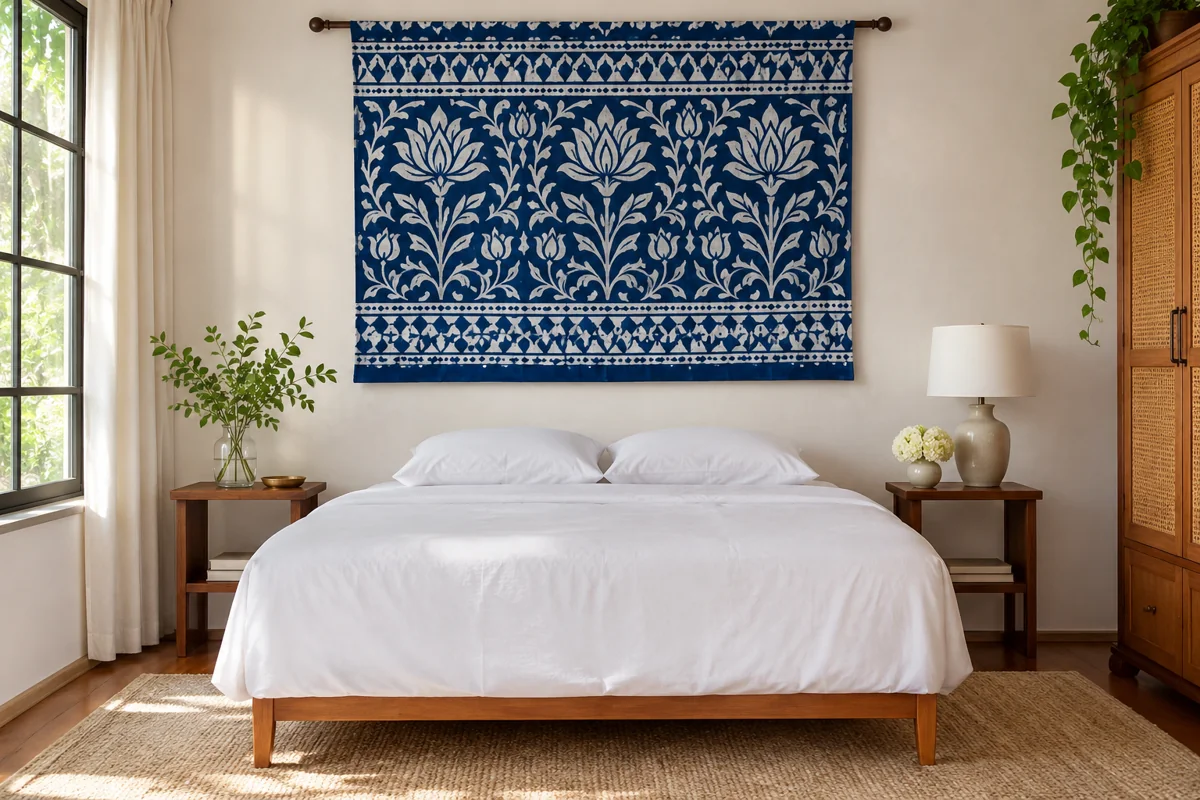
A patterned duvet cover or spare length of fabric can become a textile backdrop. Choose fabric you can clean and a hanging method that supports it without tearing. A rod with a sewn sleeve can make the fabric easier to remove than scattered pins.
Coordinate the backdrop with simpler bedding so that both patterns do not compete. Keep fabric clear of the pillow area and heat sources, and check the rod’s mounting requirements. The fabric is decoration, not a replacement for a secure backrest.
Bright Half-Circle
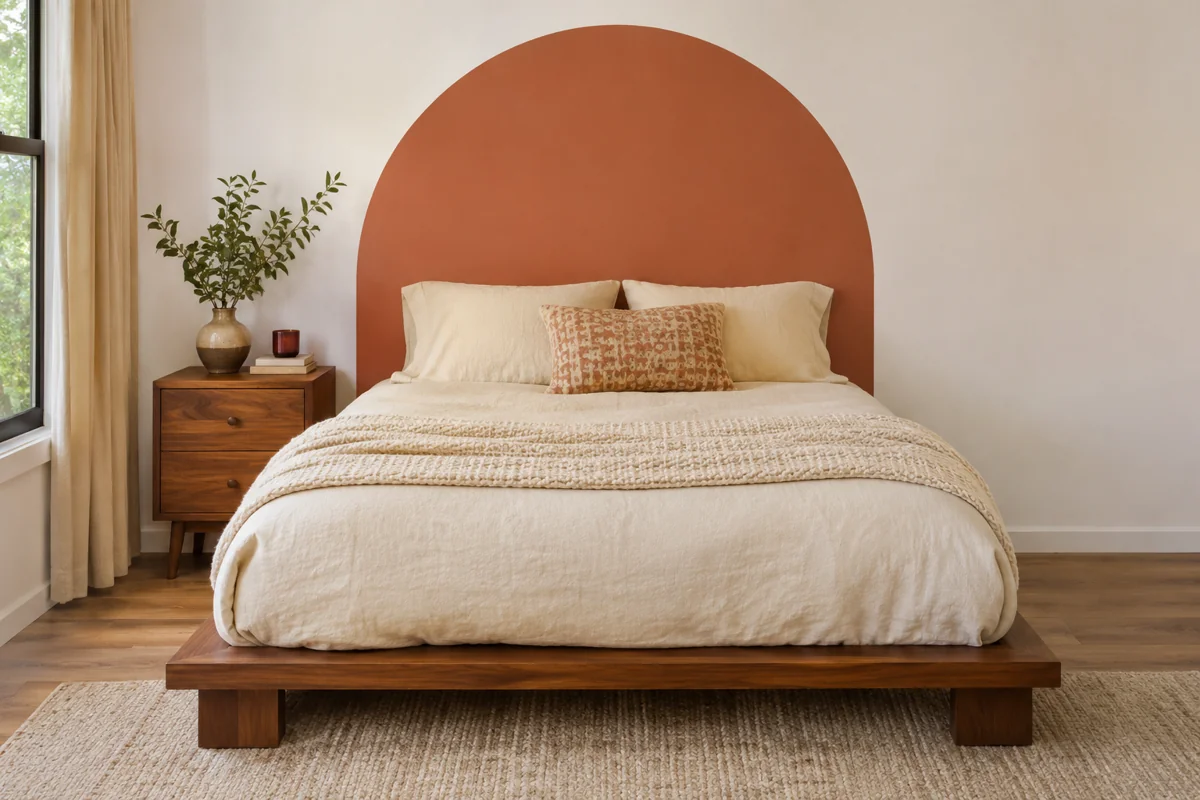
A painted arch or half-circle creates the outline of a headboard on the wall. Decide where the bed will sit, mark its center and use removable tape or a paper template to check the shape before painting. View it with the mattress and pillows in place so the visible portion feels balanced.
Use paint and preparation suitable for the wall. A wider arch can frame the bed and nearby tables; a narrower one draws attention to the mattress. There is no universal height or width, so choose proportions that work with your furniture.
Geometric Shapes
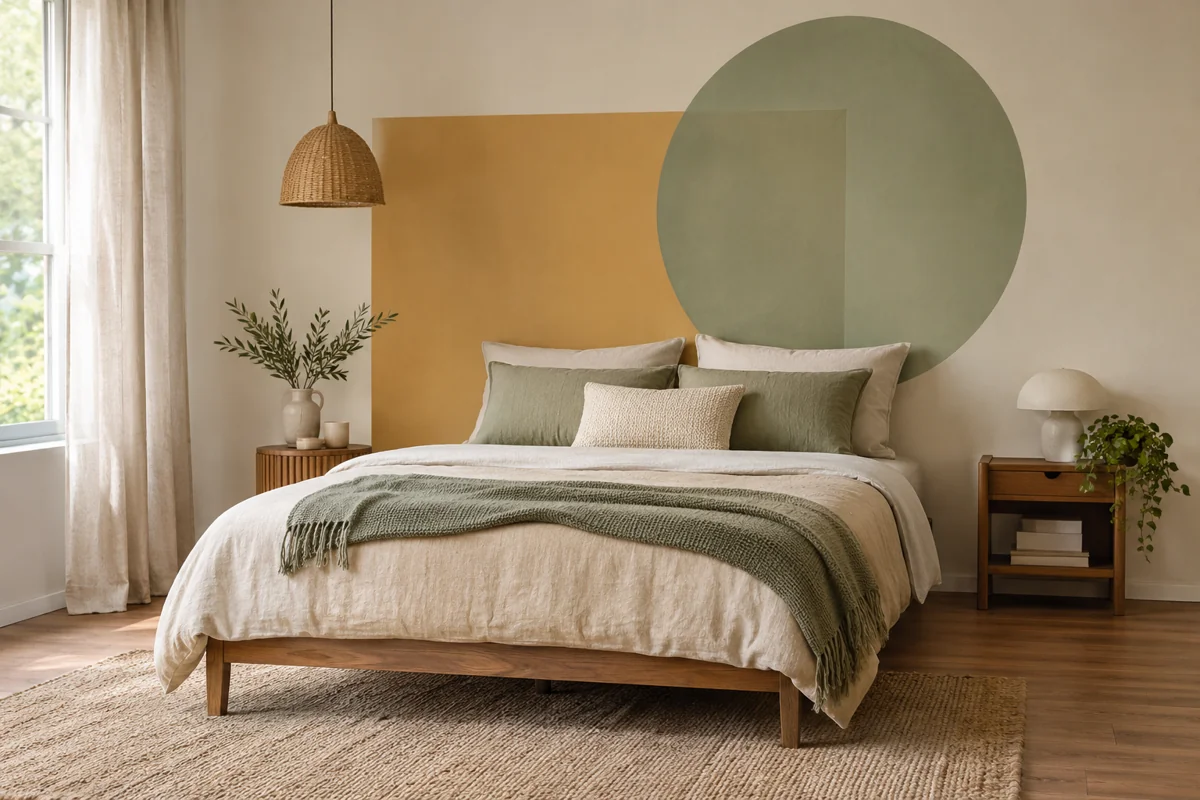
Painted rectangles, overlapping blocks or a simple stripe can make the wall behind the bed feel deliberate. Limit the palette to a few colors already used in the room. Mark the design first and check that it still makes sense when partly covered by pillows.
For a temporary version, use wall decals intended for the surface rather than gluing cardboard or loose decorative pieces to the wall. Check removal instructions and test compatibility before covering a large area.
A Cork or Fabric Pinboard

A wide cork or fabric-covered pinboard directly behind the bed can create a changeable headboard feature. Size it to frame the mattress, leave the lower area plain behind the pillows, and keep photographs or postcards in the visible upper area. A fabric board with ribbon holders gives the same display effect without exposed pins near the sleeper.
Mount the complete board appropriately for its weight and wall type. Keep clips, pins and other small pieces out of the pillow area, and do not use it for heavy objects. Unless the product is designed for leaning, treat it as decoration and use suitable pillows or a reading wedge for cushioning.
Doors
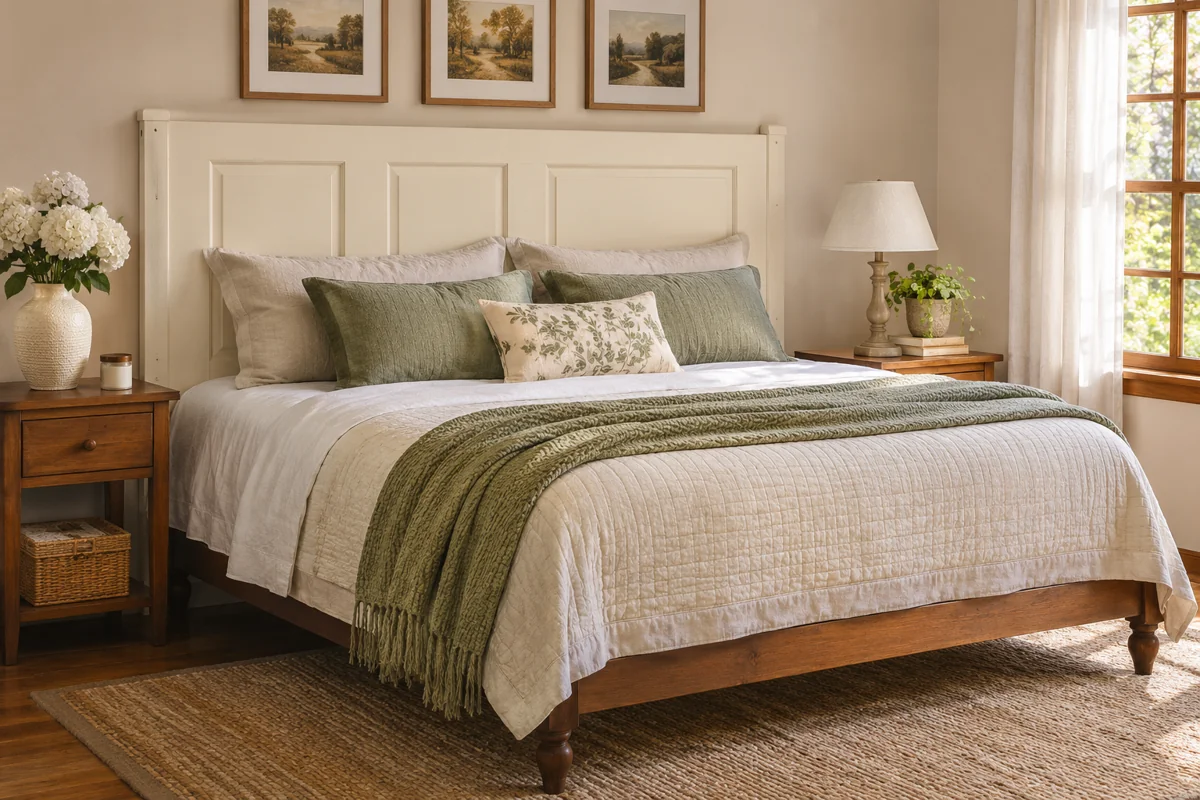
A clean interior door can become a characterful headboard project, but it needs a real attachment plan. Check its condition, weight and finish before bringing it into the bedroom. Do not prop a loose door behind the mattress or assume that a couple of unspecified screws will secure it.
Plan the wall or frame connection before refinishing. Remove unnecessary handles and sharp projections, and get appropriate help for heavy pieces. If the finish or history of an old door is unknown, have it assessed before sanding. Transporting one? Our headboard-in-an-SUV guide explains which dimensions to measure before pickup.
Wall Decals
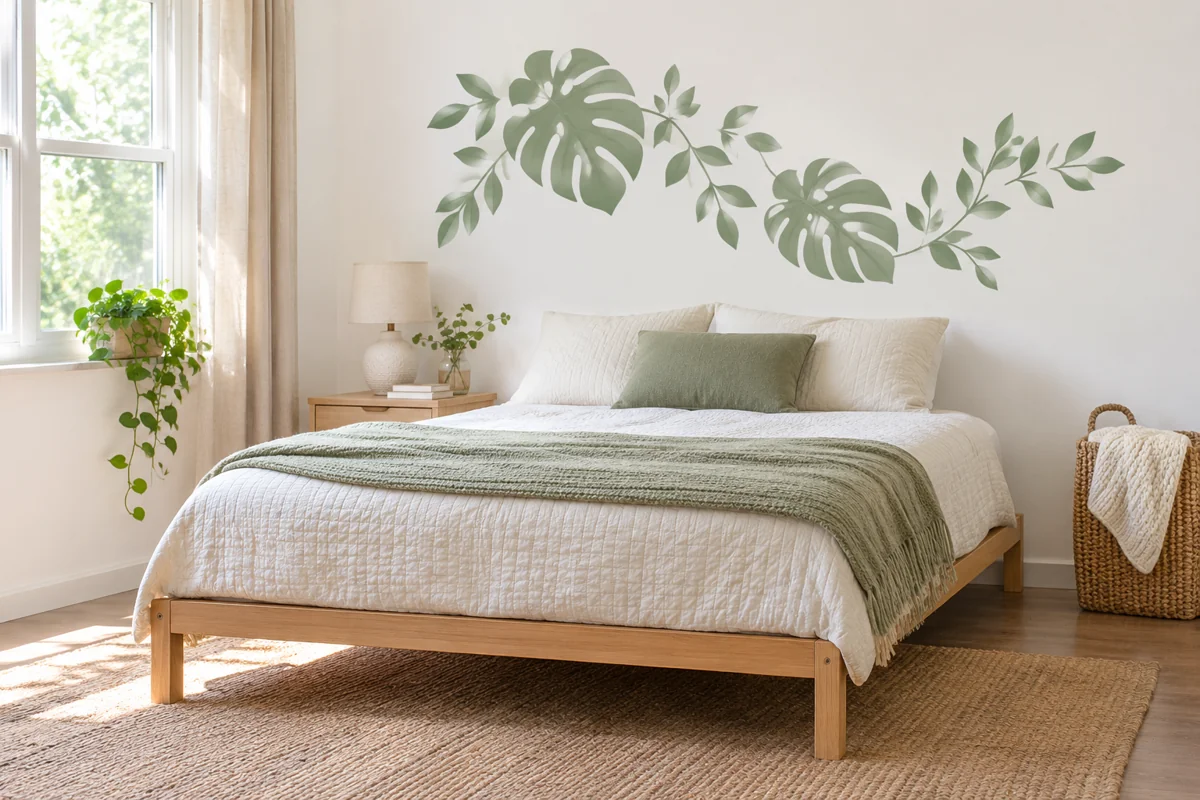
Decals can add a headboard outline, simple arch or decorative pattern without adding furniture depth. They are a useful option to compare when you want a visual change but cannot drill into the wall.
Check the wall finish, paint cure time and removal directions for the exact product. A removable label is not a guarantee against damage to every paint surface. Test a sample where it will not show, and get permission before applying it in a rental.
Wood Slats or Decorative Paneling
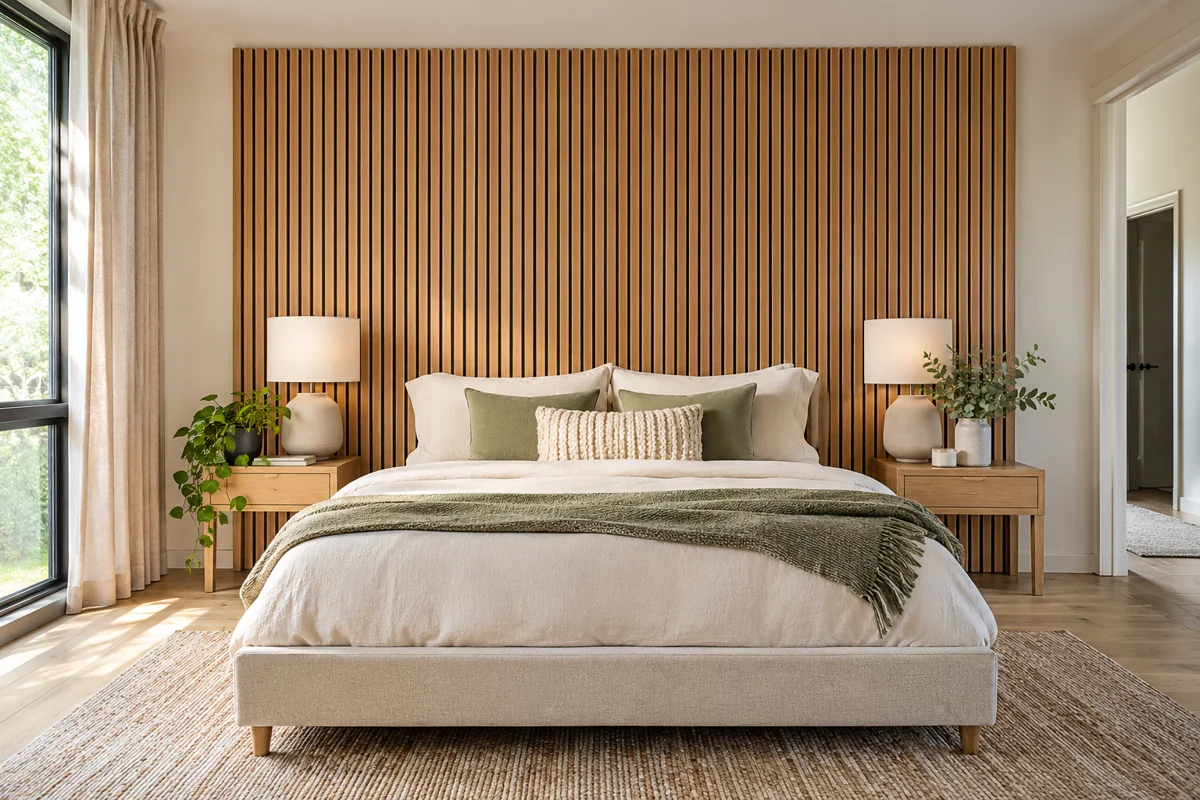
A timber slat panel gives a more architectural look than a separate headboard. Choose material intended for indoor use, check the finished edges and work out the attachment method before cutting. Account for the extra depth if the room is already tight.
Avoid treating unknown outdoor fencing or untreated scrap as ready-to-use bedroom material. Decorative panels are not automatically designed for leaning loads. If you want a working backrest, choose a purpose-built system or have the assembly designed for that use.
Window Shutters
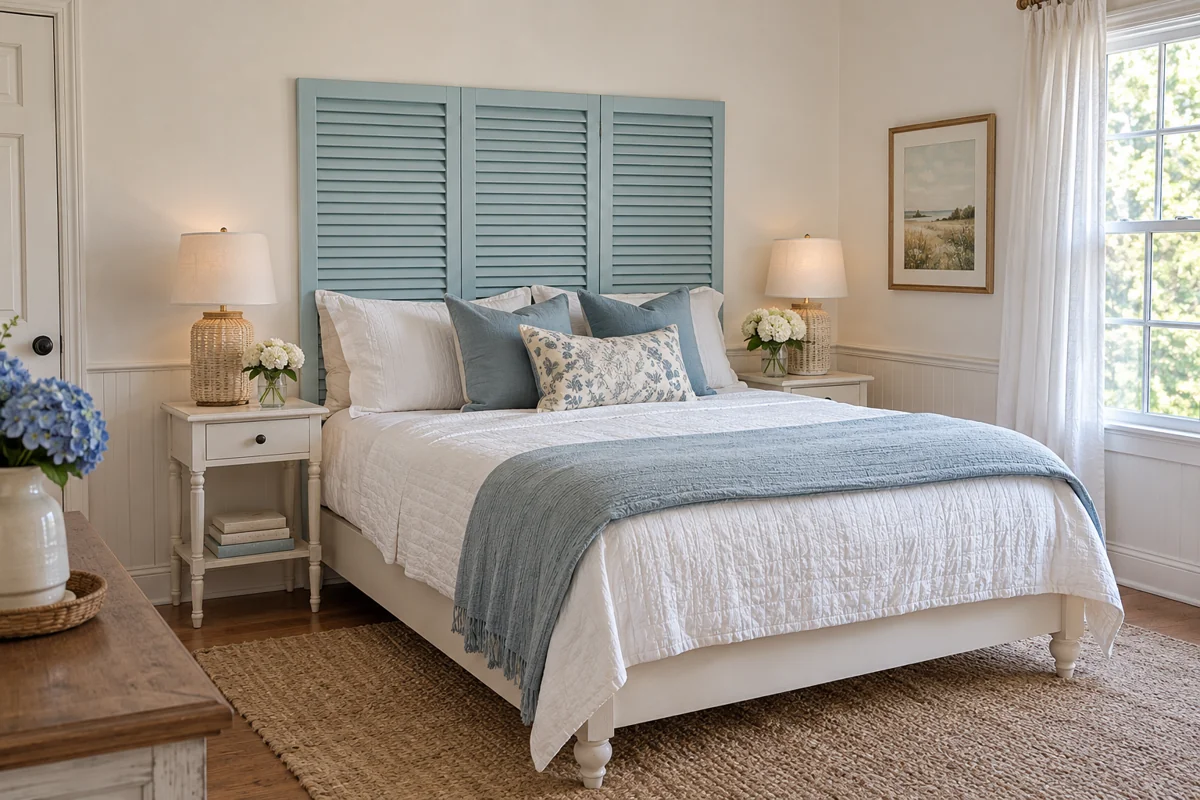
Shutters can give a cottage or vintage look when arranged as a decorative panel. Before choosing salvaged shutters, check the finish, hinges, projecting hardware and overall weight. Smooth-looking paint does not tell you whether an old coating is suitable to sand.
Treat the assembled panel as a mounting project, not as an object to stand loose behind the bed. For the same look with less work, compare an indoor decorative panel made for wall installation. Do not use shutters as support for the bed frame.
Shadow Boxes
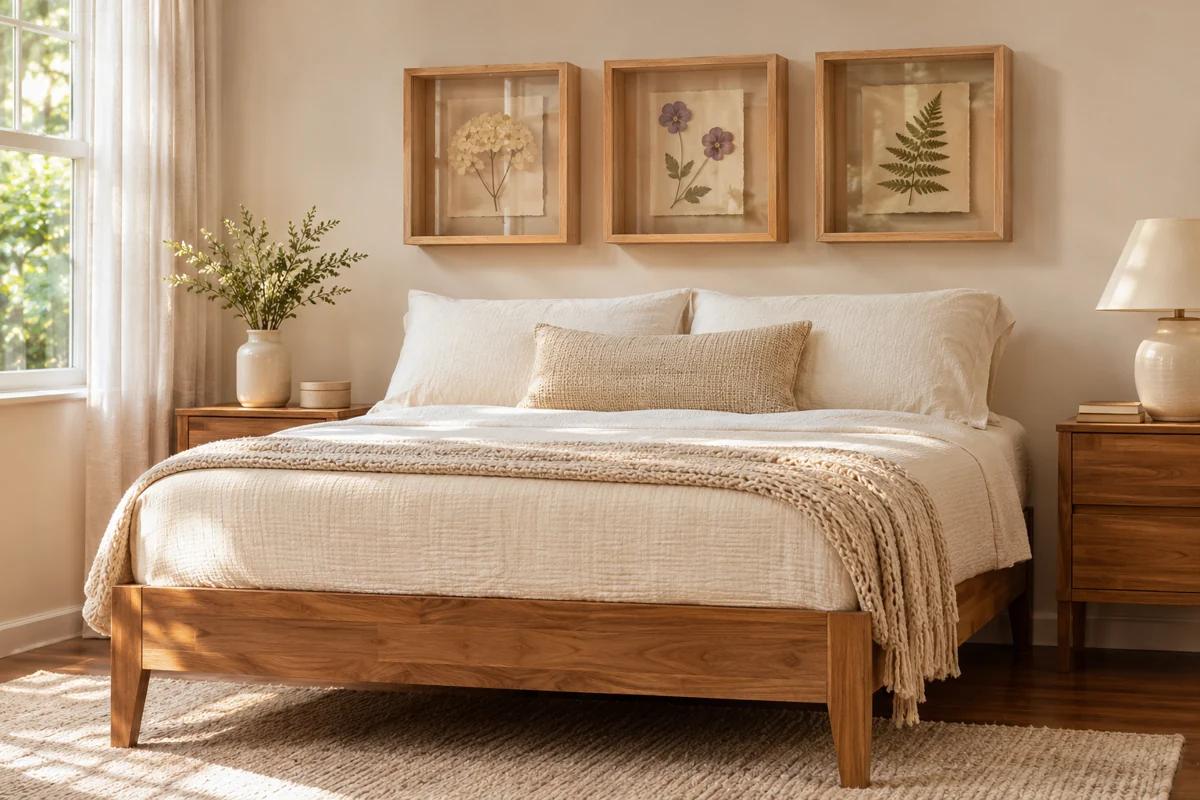
A row or grid of shallow shadow boxes centered directly behind the bed can form a decorative headboard arrangement. Unlike flat picture frames, the recessed boxes give small keepsakes depth. Keep the grouping visually connected to the mattress width and choose lightweight contents so the design does not feel crowded.
Check the combined weight of each box, its front and its contents, and use suitable mechanical mounting for this location. Lightweight acrylic-fronted designs are an option to compare with glass-fronted boxes. Keep enough clearance above the pillows and seated head; the boxes should not become a surface to lean against.
Macramé and Area Rugs
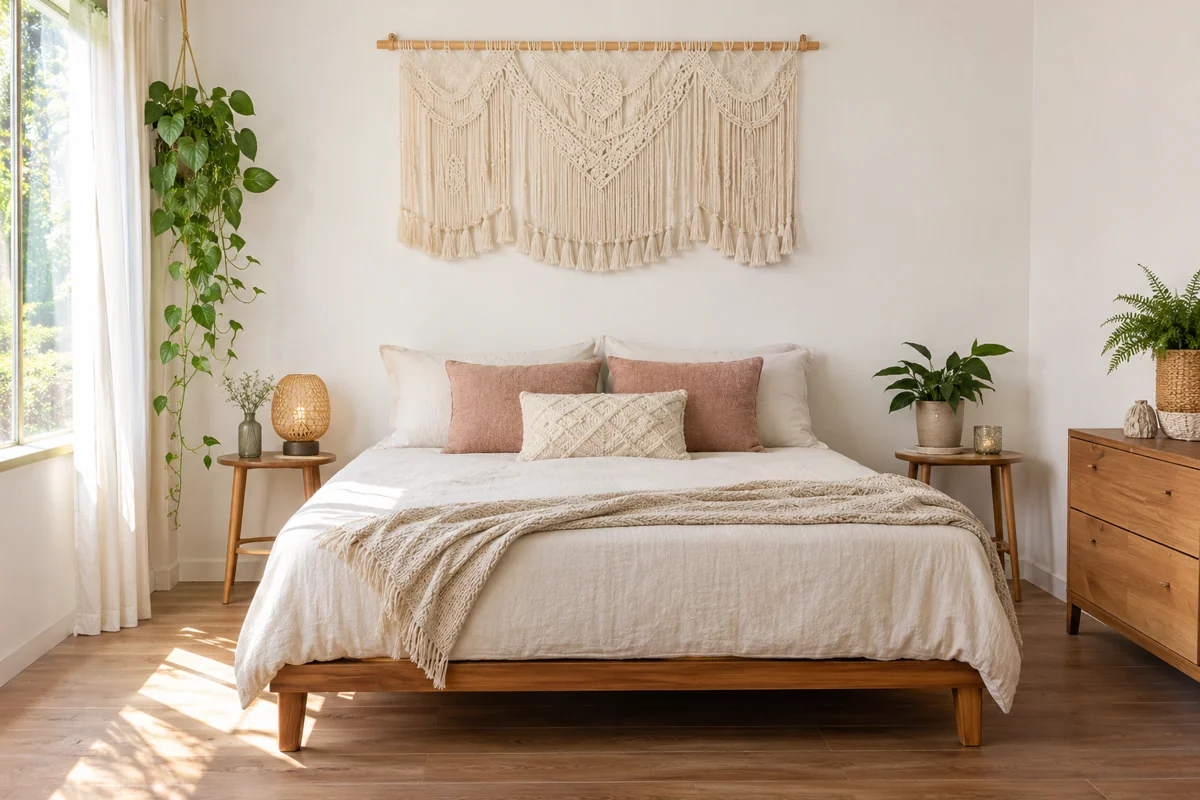
Macramé and woven textiles can give a bedroom a softer focal point. A lightweight wall hanging is generally simpler to plan than a thick floor rug. Check the finished weight, rod and wall attachment together.
A rug needs a textile-hanging system appropriate to its weight; a few nails through the fabric are not a general installation method. Keep loose fringe and fabric clear of pillows and lamps. If you want the rug on the floor instead, see how to position a rug beneath a heavy bed.
Open Books
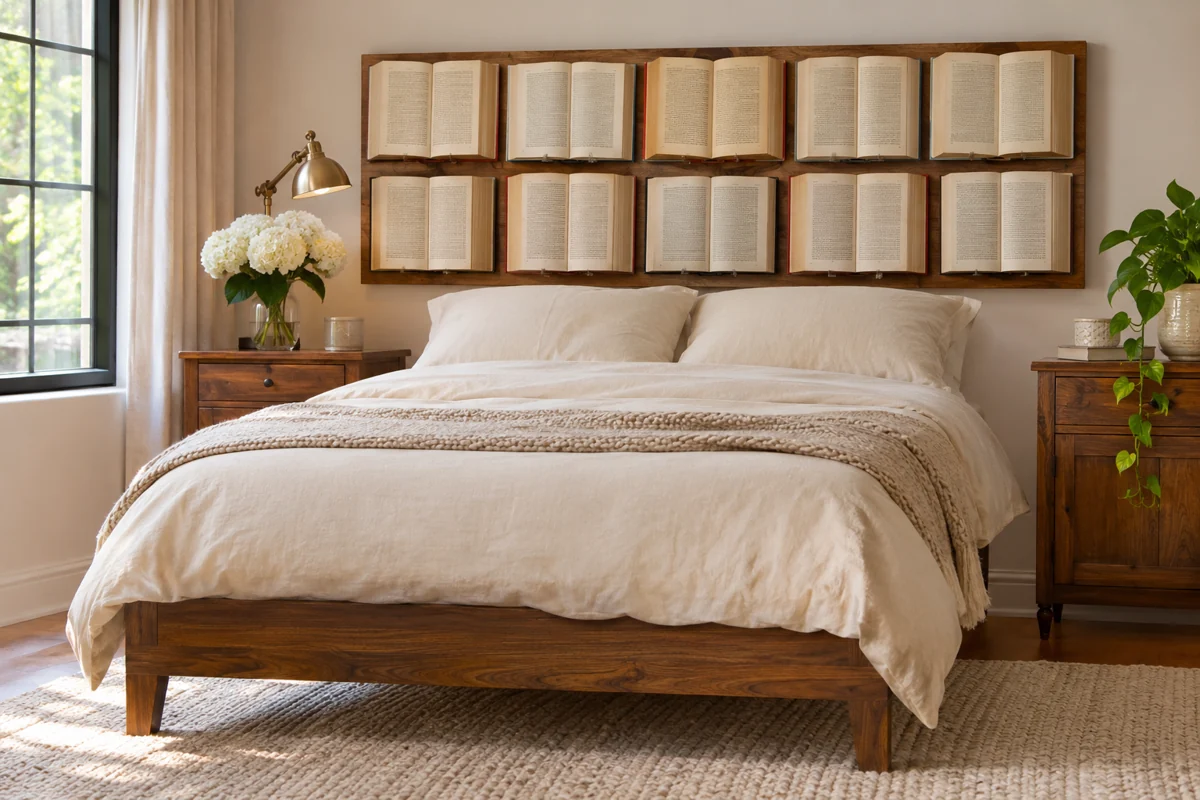
Actual open books arranged across a backing panel can create a distinctive literary headboard. The real covers, page edges and curved pages give this idea texture that a book print does not. Use unwanted books rather than valuable editions, and plan the whole arrangement on a work surface before deciding on its position behind the bed.
This is a custom display project, not a matter of resting open books above the pillows. Have the backing, book retention and wall attachment designed for the total weight and the sleeping-area location. Covers and pages must not detach or shift. Do not rely on loose stacks, a few nails through pages or glue alone as a general installation method. Keep the display clear of the seated head and use a separate support for leaning.
Woven Cane Room Divider
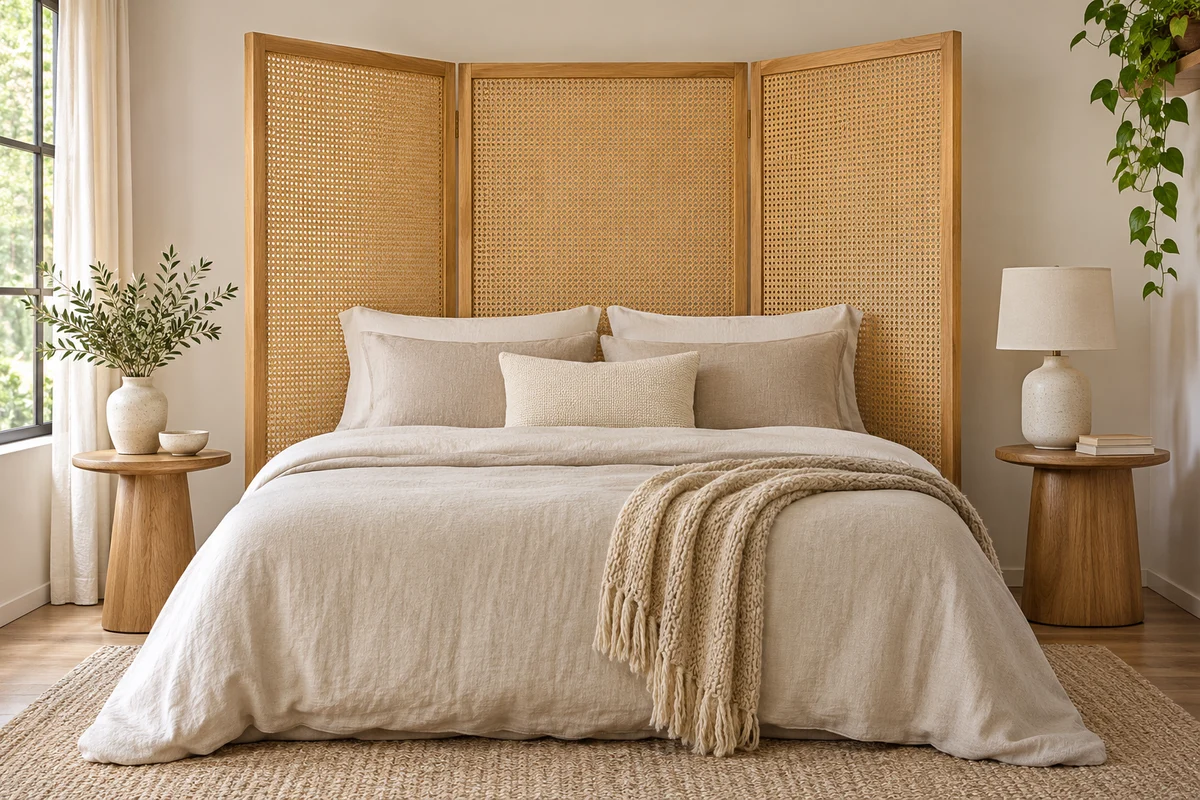
Center a woven cane divider behind the mattress to bring a lighter, more open texture to the bed wall. A three-panel screen can frame the mattress with its outer panels angled slightly forward. Measure the screen in that position, since folding the panels changes how much of the wall they cover and how far they project into the room.
Choose a divider whose maker allows it to be secured in that position and follow the installation instructions. Leave clearance so the mattress, pillows and bed frame cannot push against it. If the screen can tip toward the bed, choose another setup.
Picture-Frame Wall Molding
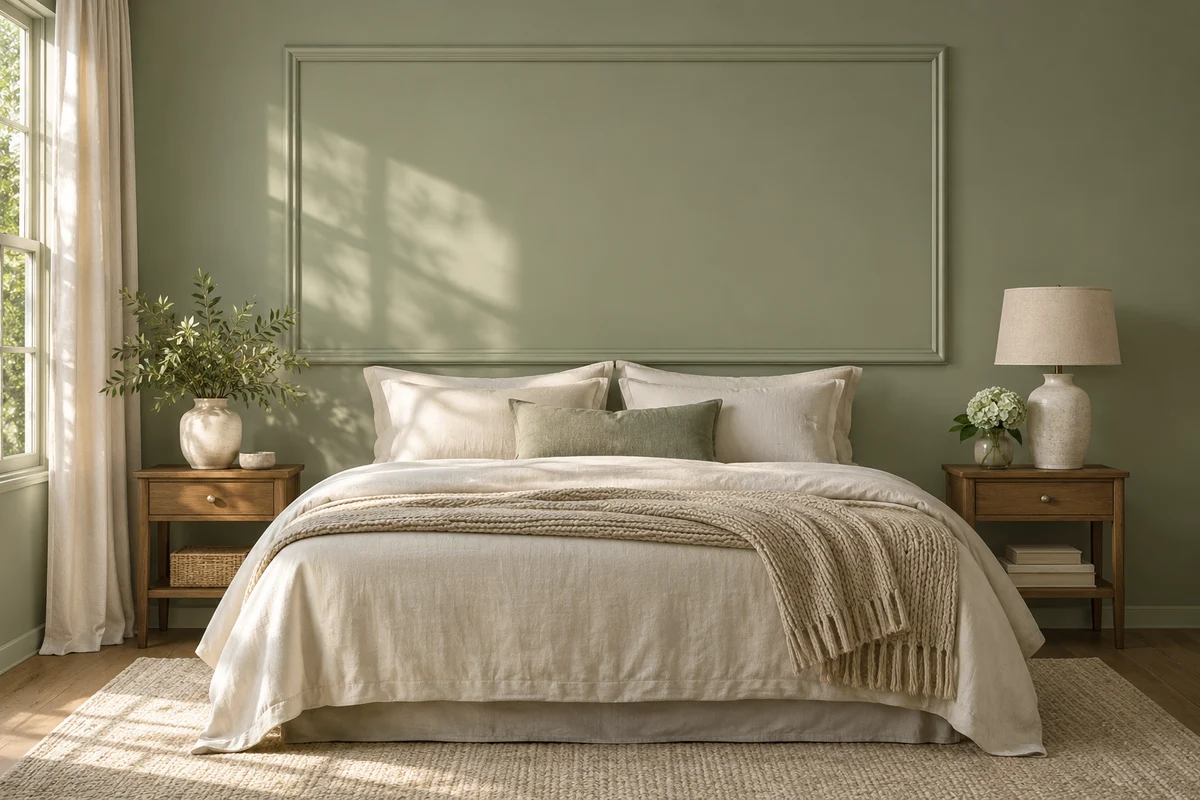
Create a headboard outline by framing the wall behind the bed with one wide rectangle of decorative trim. Center it on the mattress and tape out the shape before committing. Check the outline from the doorway with your pillows in place so the bottom edge and proportions look intentional.
Paint the trim and wall the same color for a subtle outline, or use a contrasting shade to make it stand out. Check where the pillows and your head reach when you sit up. A shallow trim profile gives you the look with little added depth.
Frame the Bed With Plug-In Wall Sconces
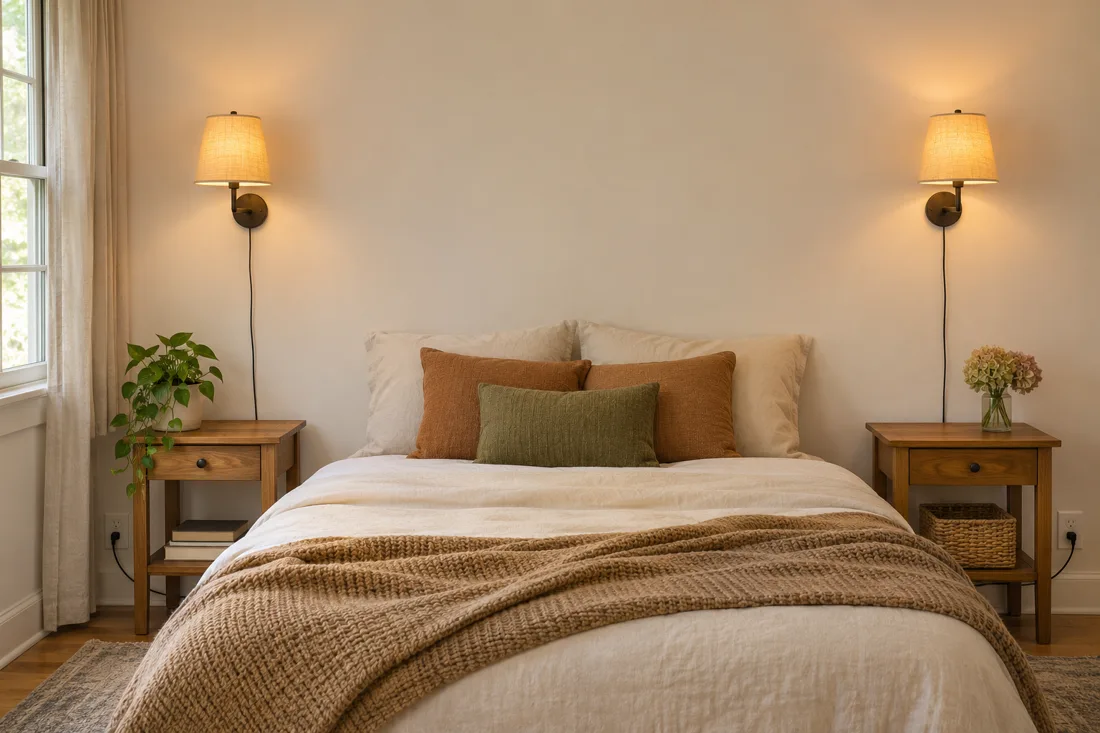
Best for: Bedrooms where you want reading light and more room on the nightstands. Use paper templates to try the positions before mounting. Check that you can reach each switch from bed. If buying, choose plug-in fixtures with suitable mounting hardware and enough cord to reach outlets along the wall, clear of bedding and walkways.
Use Two Slim Floor Lamps
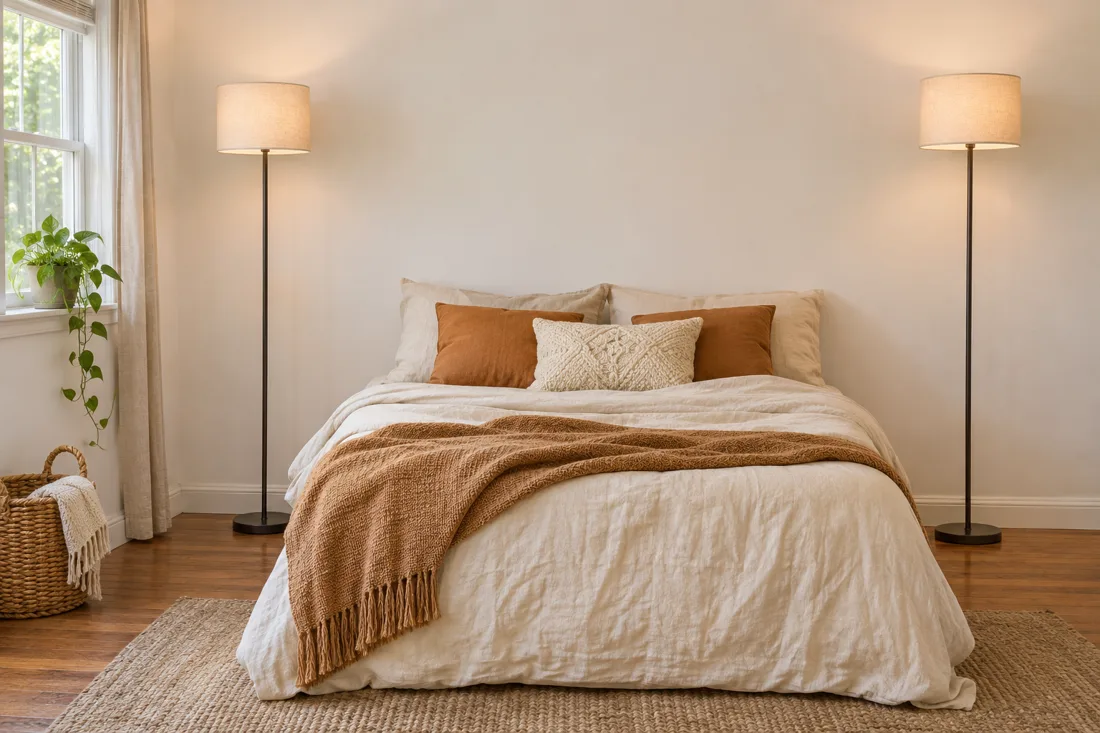
Best for: Renters who have a little spare floor space on each side. Try two lamps you already own at roughly the same height. If buying a pair, measure the base as well as the shade. Keep both bases clear of your walking route and cords out from under rugs.
Tuck the Bed Into an Existing Alcove
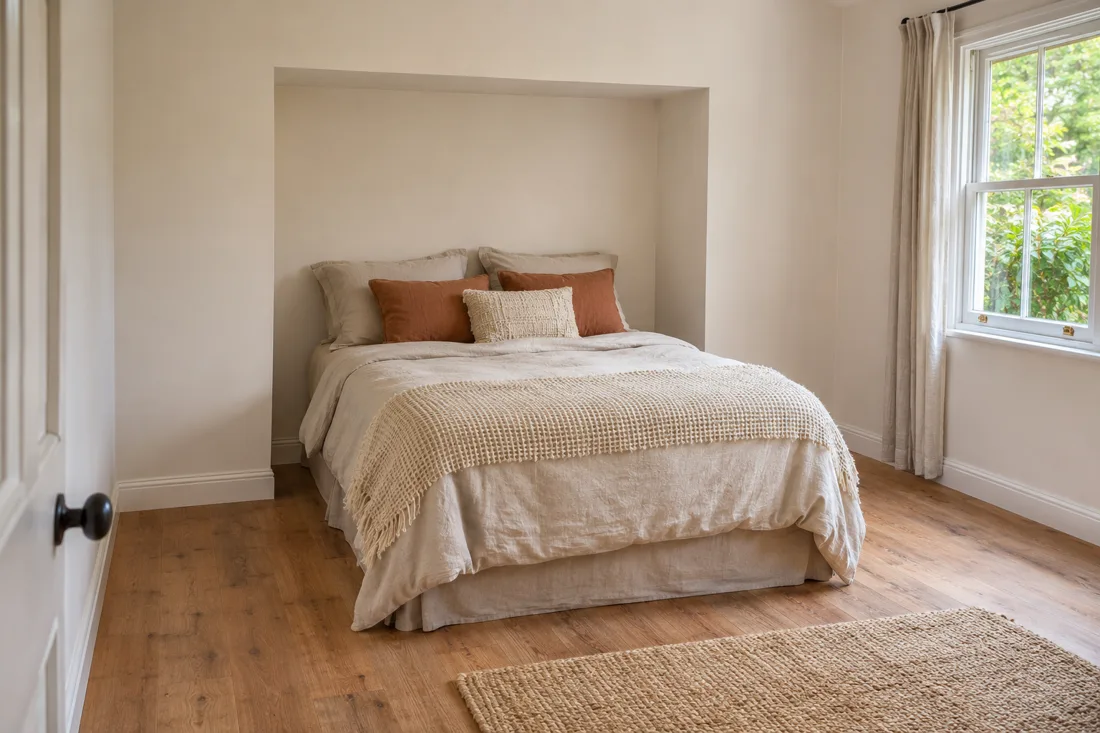
Best for: Small rooms with an existing recess wide enough for the frame. Measure the narrowest point, including baseboards, then compare it with the outside of the bed frame. Before moving the bed, check that you can reach the mattress corners to change the sheets and that outlets, vents and doors stay accessible.
Choose an Open Four-Poster Frame
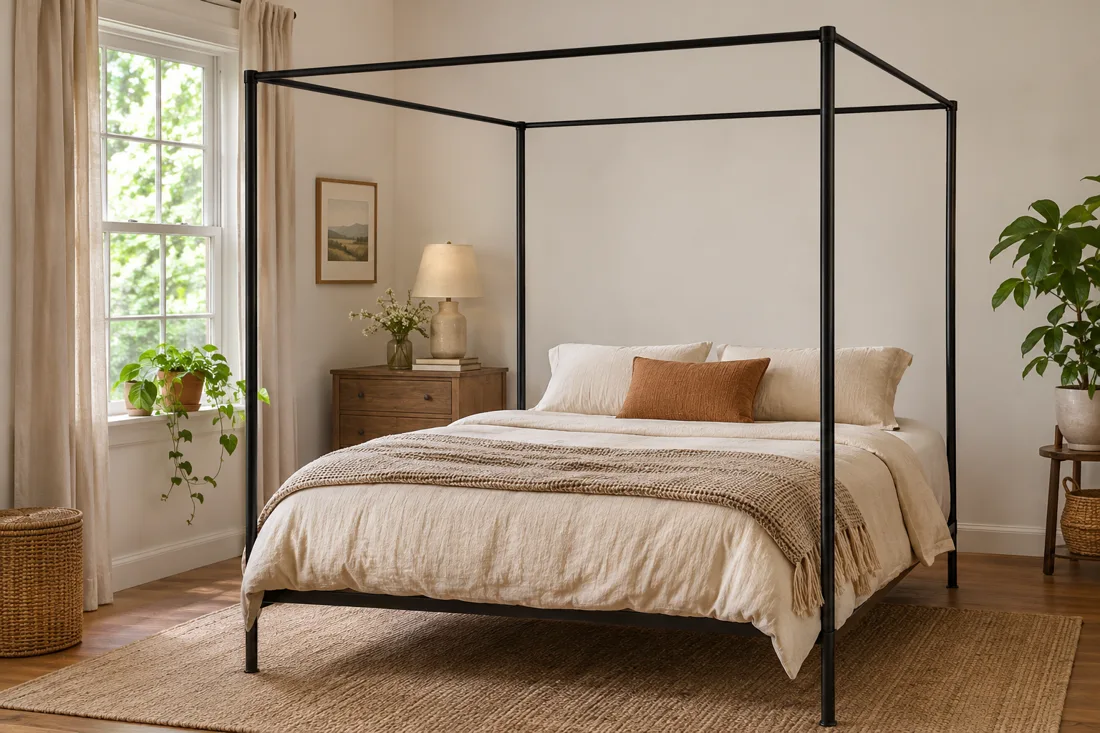
Best for: A bedroom that can accommodate a taller frame. Look for a complete frame designed to be used without a headboard. Measure the tallest post against the ceiling and check nearby doors, light fixtures and ceiling fans. If you already have a four-poster, check the assembly instructions before removing any panel.
Add a Light Fabric Canopy
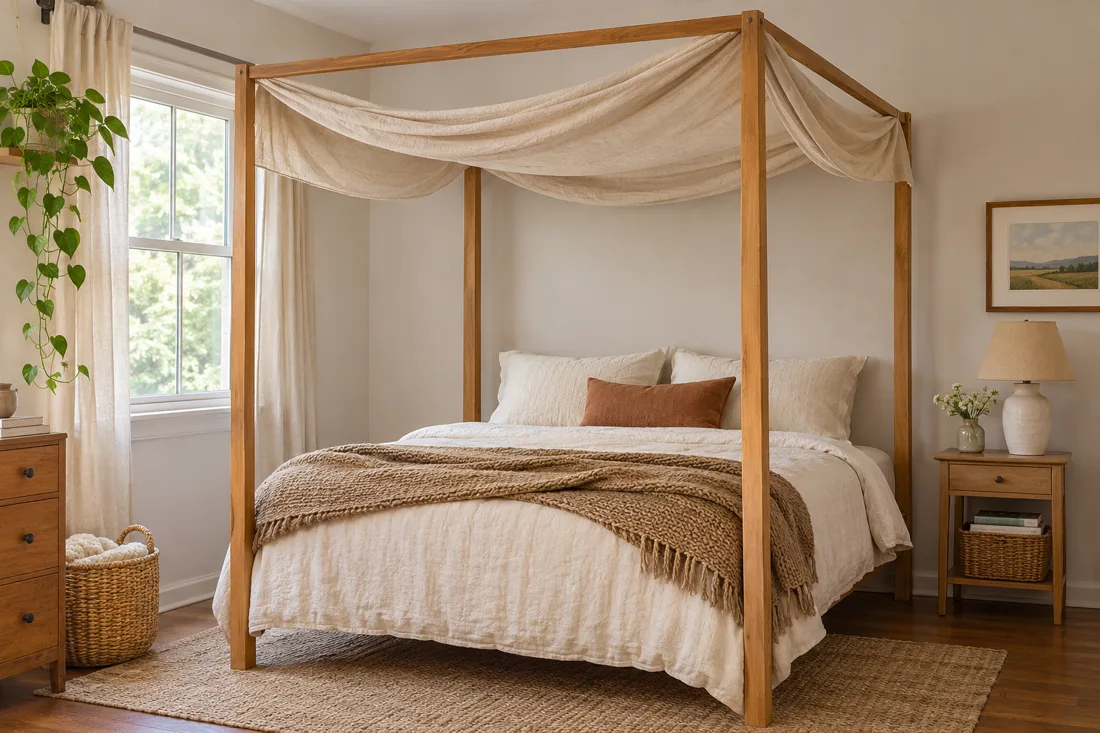
Best for: An adult bedroom with a compatible canopy frame. Try a lightweight fabric panel on a frame designed to hold canopy fabric. Hem unfinished edges if needed and attach it as the frame maker directs. Keep it clear of fans, lights and heaters. Look for a compatible canopy kit if you want the fabric and attachments together.
Layer Oversized Euro Pillows
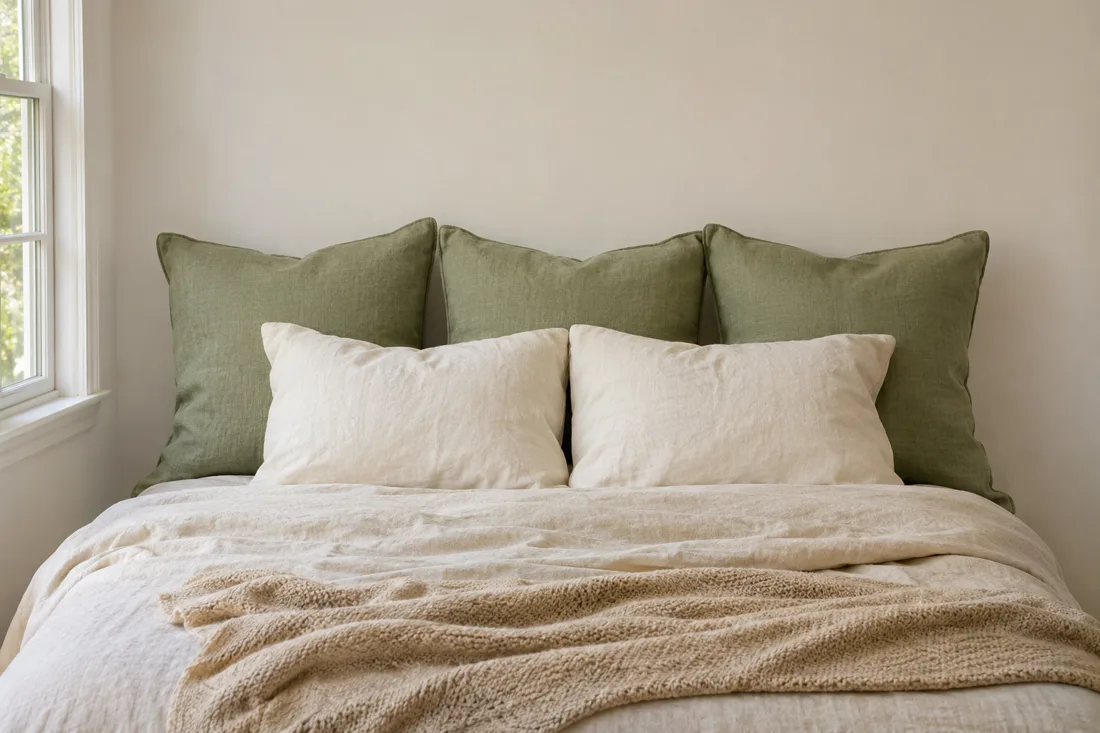
Best for: A quick, no-drill change using bedding you can swap seasonally. Start with two large square inserts and covers, then add a third only if it fits without crowding the bed. Put your sleeping pillows in front and move the decorative layer aside at night. For support while reading, see the reading wedge option.
Paint the Ceiling a Contrasting Color
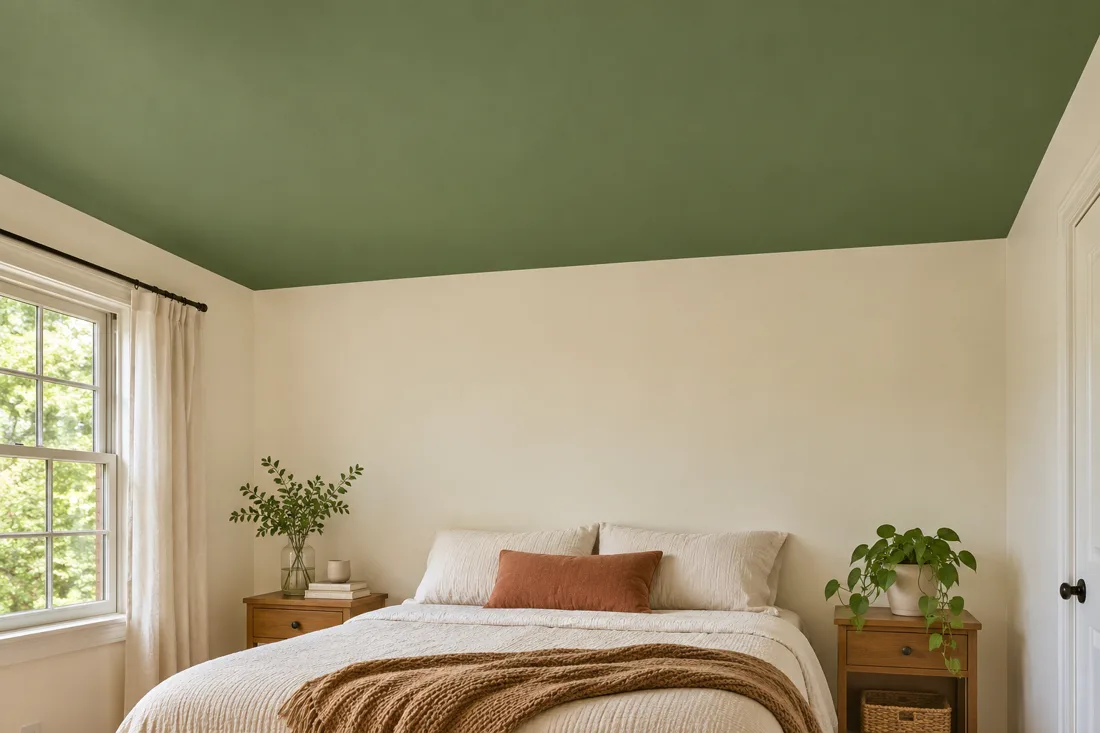
Best for: Small bedrooms where there’s little room for a headboard or wall decor. Try a large paint swatch first and check it in daylight and under your bedside lamps. Repeat the color in one pillow or throw to tie it to the bed. If you rent, check whether ceiling paint is allowed.
Frame the Bed With Matching Nightstands
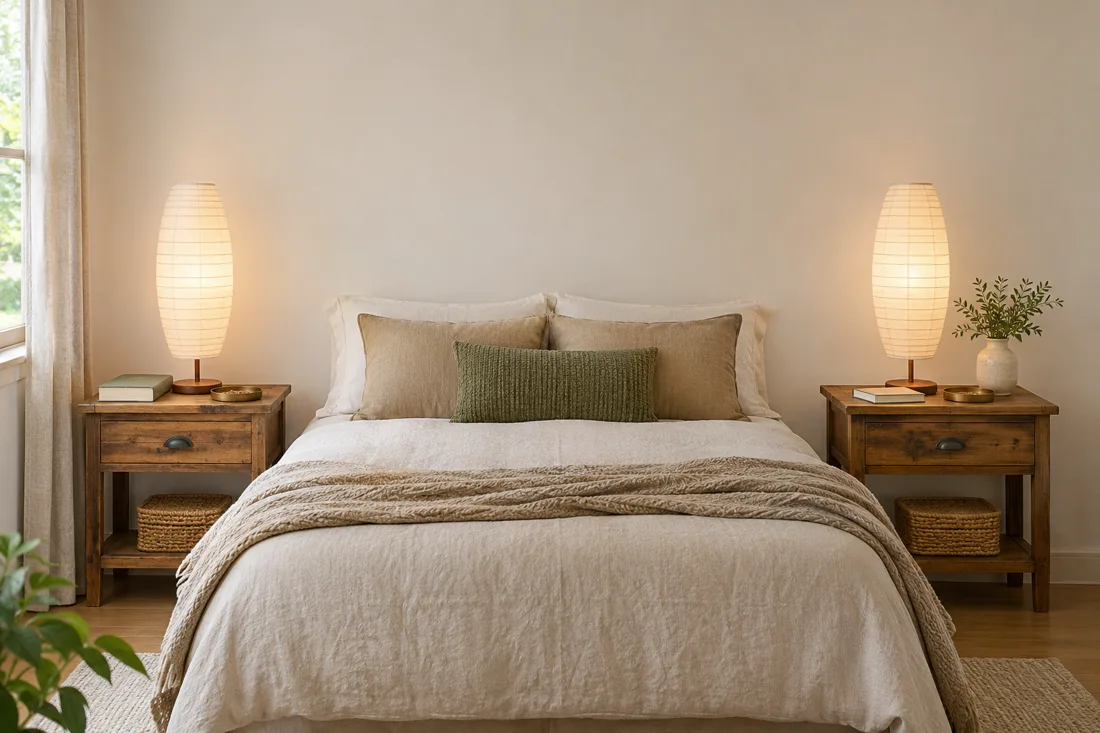
Best for: Bedrooms where you want both bedside storage and a stronger visual frame. Refinish two secondhand tables in the same color or use a matching pair you already own. Check that drawers can open beside the bed, then use lamps with stable bases to add height. If floor space is tight, look for narrow tables with drawers.
What If You Want to Sit Up and Read?
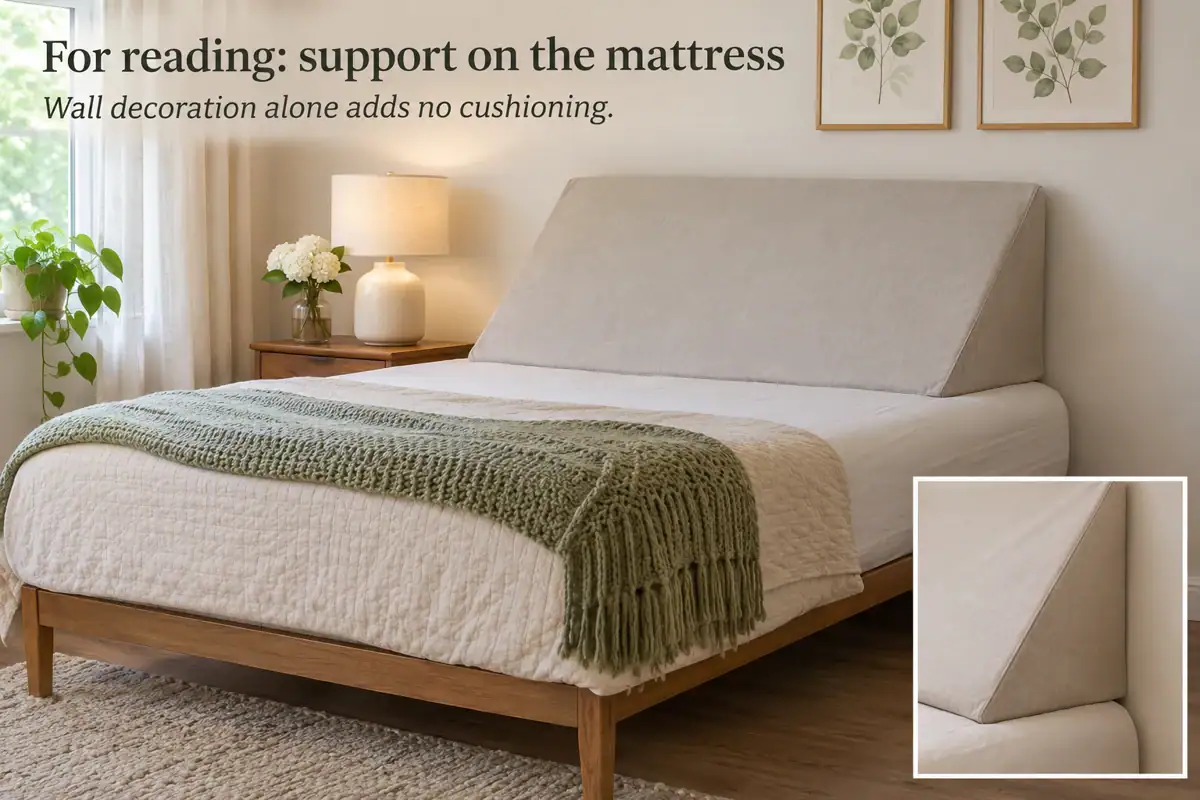
Choose support intended to rest on the mattress, such as a suitable reading wedge, or a properly installed backrest designed for leaning. Check the space it leaves for sleeping and follow its care and use instructions. Paint, wallpaper, a curtain and a hanging rug can frame the bed visually, but none provides the same function as padding or a supported backrest.
Amazon Reading Pillow to Compare
A WOWMAX triangular headboard reading pillow is one option to compare for this setup. The linked listing is a filled queen-size cushion in grey, with a removable cover; it is not a cover-only listing. Check the selected width against your mattress, the space the wedge takes up, the care instructions and current availability before ordering.
The room example above shows a representative reading wedge. The actual product’s shape, filling, color and finish can differ; use the listing’s photographs and specifications when choosing.
As an Amazon Associate, we earn from qualifying purchases.

Last update on 2026-11-28 / Affiliate links / Images from Amazon Product Advertising API
How Do You Make a Homemade Headboard?
An upholstered panel is a separate DIY headboard project rather than a purely decorative wall treatment. Decide how it will be attached before buying materials. The board, padding and fabric need to suit the intended use, and the finished piece needs an attachment system appropriate to its weight, wall or bed frame and any leaning loads.
- Measure the outside bed width and the desired visible height with the mattress and pillows in place.
- Choose a complete design and mounting plan. Do not select fixings solely by appearance or use an unspecified pair of picture hooks.
- Prepare the board, padding, batting and upholstery fabric using the chosen project’s instructions and suitable tools.
- Finish the edges, check for projecting staples or trim, and install the piece using the planned attachment system.
- Check that it is secure and that the bed still has all required supports before using it.
For a worked upholstery example, see This Old House’s upholstered-headboard project. Its particular construction is an example, not a universal hardware specification for every bed or wall.
Which Options Work Best in a Rental?
Start with the lease and the landlord’s permission. If drilling and repainting are prohibited, keeping the wall plain and using a suitable reading wedge or coordinated bedding may be the simplest route. Consider decals or removable wallpaper only after checking the exact product and testing the wall. Do not substitute adhesive strips for a mounting method that is required above the bed.
Which Alternative Should You Choose?
For the simplest visual change, start with paint or a compatible wall treatment. For softness, compare curtains or a lightweight textile. For reading comfort, prioritize support designed for that job. Save heavy salvaged pieces and built-in-looking projects for situations where you can assess the material and install them properly.