

You can reuse a box spring with a new mattress if the mattress maker approves that type of base and your existing base meets its support requirements. Before ordering, check what’s inside the box, whether it’s still flat and sound, and how it’s supported by the bed frame. A mattress and base can be the same size and still be incompatible.
Is It a Box Spring or a Foundation?
A traditional box spring uses springs that flex. A rigid foundation uses a firm deck or fixed slats and can have the same upholstered shape. Look for a model label underneath or check your original order. If the cover hides the construction, send the manufacturer the model number or photos before assuming which one you have.
| Base | How to identify it | What to verify |
|---|---|---|
| Traditional box spring | A fabric-covered frame with a spring system that flexes under load. | Keep it only if the mattress maker allows a sprung base and yours meets its condition, age, and support requirements. |
| Rigid foundation | A separate support box with a firm deck or fixed slats. It can look like a box spring from the outside. | Verify the deck or slat specifications, load rating, and support underneath the foundation. |
| Platform bed | The bed frame itself provides a deck or slats for the mattress. | Check the largest clear slat gap, minimum slat width, and center support. An approved platform can support the mattress directly. |
| Adjustable base | A powered base that raises part of the mattress. | Check that the exact mattress model and size can flex on that base. Also check the base’s capacity and how it fits your frame. |
For example, Tempur-Pedic’s base guidance rules out traditional box springs. Saatva’s reuse guidance allows certain existing bases bought within the past seven years if they’re in good condition and have sturdy center support. Saatva HD requires its own HD Foundation when pairing it with a foundation. Check the instructions for your exact model and size before paying for a base.
How to Check Your Old Box Spring for Damage
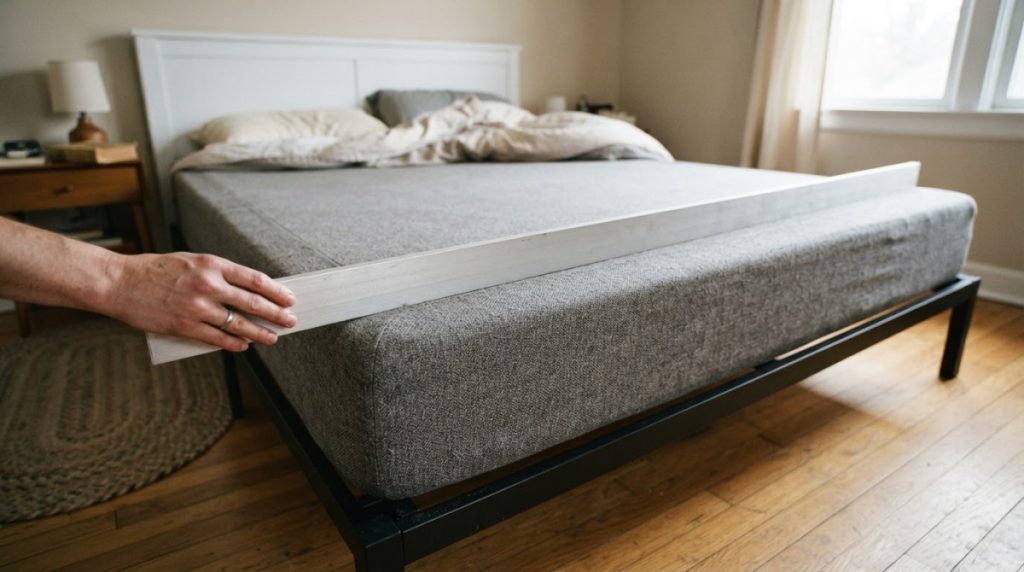
With the mattress off, place a long straightedge across the top in several directions. A visible dip, raised edge, or twisting corner is a reason to look underneath. Check for cracked boards, bent rails, loose joints, or exposed metal. Avoid putting weight on a damaged base.
Check the frame as well. See whether the base rocks because the frame is loose or a support foot has lifted off the floor. If the base itself has structural damage, replace it with an approved support. For more signs to look for, see how to tell if you need a new box spring.
Measure the Slats, Center Support, and Mattress Fit
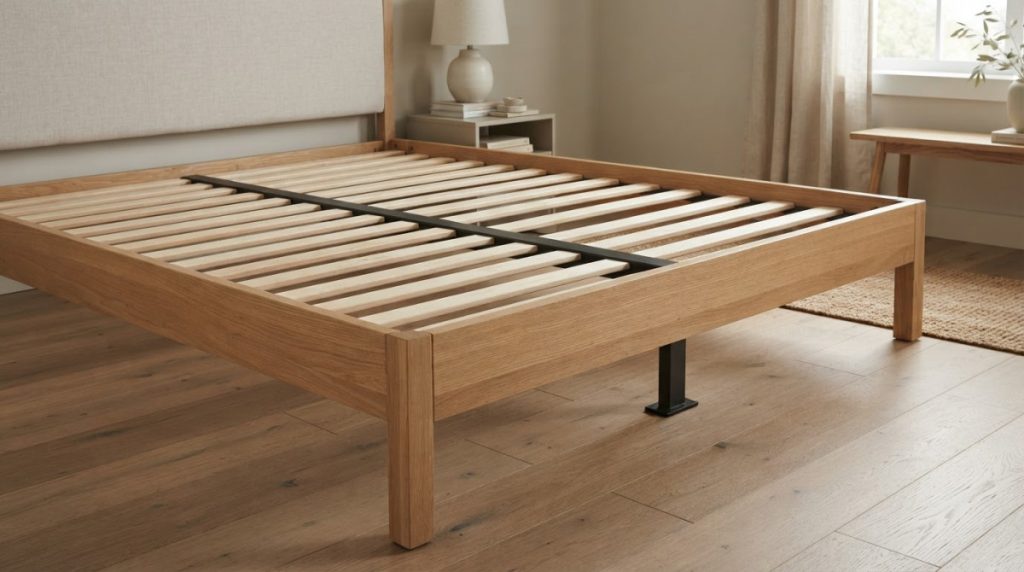
Measure the clear gap edge to edge. Check several gaps and use the widest. For example, if the listing allows a maximum gap of 3 inches and your widest gap is 3½ inches, the slats as installed fall outside that requirement. Ask which platform or foundation the maker approves before adding a board or buying new slats.
Look below the slats or foundation. Check whether the frame has the required center rail and floor-contacting support legs for your mattress size. Measure the base’s outside width and length and compare them with the mattress dimensions and the space inside the frame. For a split foundation, check how the frame supports both halves at the seam.
Check what the weight rating includes. Some ratings describe the load carried by the base, while others describe the entire setup. Ask whether the limit includes the mattress, sleepers, and any foundation sitting on the frame. If you can’t find a rating or model number, ask the manufacturer what information they need to assess it.
Worked Example: Keep the Old Base or Buy a Lower One?
Say the surface of your frame that holds the foundation is 8 inches off the floor. With a 9-inch box spring and a new 12-inch mattress, the top of the bed would be about 29 inches high. If the new mattress requires a rigid foundation, a compatible 5-inch foundation on the same frame would bring it to about 25 inches. Those are example dimensions. Measure to the surface that actually carries the foundation, especially if it sits down inside the side rails.
Before buying, compare that finished height with your current bed and check how much of the headboard will show. If you’re trying to keep the same frame and lower the bed, see the guide to lowering a tall bed.
What to Confirm Before You Order
If you plan to reuse your base, send the seller the exact mattress size and model, your base’s label or photos, and a picture of the center support. Ask for written confirmation that the setup meets the warranty requirements. Keep the reply with your receipt.
If you need a replacement, compare an approved low-profile foundation for your existing frame with an approved platform bed that supports the mattress directly. Check the finished height, capacity, required center legs, delivery dimensions, and whether assembly or old-base removal costs extra. A thin bunkie board is worth comparing only if both the mattress and frame makers allow that setup.
Before scheduling delivery, check whether the foundation comes in one piece, in two halves, or in a flat box. Measure stairs and tight turns using the largest piece or carton. Ask whether the foundation has a separate return fee or return window from the mattress.
Sources:
www.sleepboutique.ca/low-vs-high-box-springs/
www.amerisleep.com/blog/bed-slats/