

Start by finding where the stool moves. On a hydraulic pedestal stool, check the floor, base ring, center column, footrest and screws beneath the seat. If yours has four legs, start with the floor and leg joints, then check the seat fasteners. A cracked base or bent column calls for replacement of the damaged part or the stool.
Quick safety check: Stop using the stool if the base is cracked, the center column is bent, the seat suddenly drops, or the stool tips unexpectedly. Never drill into, heat, puncture, or dismantle the pressurized gas-lift cylinder.
Quick Diagnosis: What Is Making Your Bar Stool Wobble?
| What you notice | Likely cause | First thing to try |
|---|---|---|
| Base rocks on the floor | Uneven flooring or worn base ring | Test on a level surface; inspect the ring |
| Column moves against the base | Loose connection or damaged base | Check accessible mounting bolts |
| Seat shifts while the base stays still | Loose seat mounting screws | Center and tighten the seat |
| Footrest or sleeve rattles | Loose bushing or trim | Inspect for a replaceable worn part |
| Stool sinks or leans at the cylinder | Gas-lift or structural failure | Stop using it; seek compatible replacement parts |
1. Check for Uneven Floors First
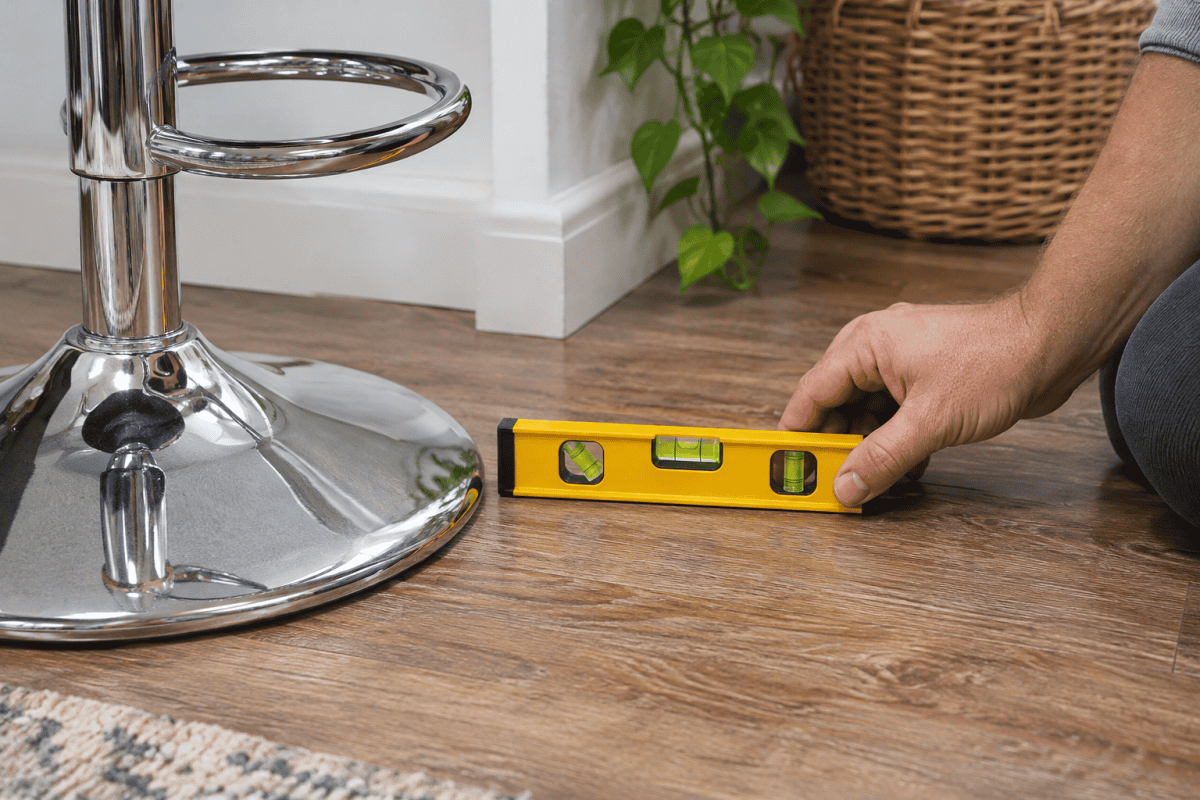
Move the stool to a known level, hard surface and gently test whether it still rocks. If the wobble disappears, the floor—not the stool—may be responsible. Tile edges, uneven grout lines, and textured flooring can prevent a wide circular base from sitting flat.
Try repositioning the stool or using a firm, flat, non-slip floor protector suitable for its base. Avoid thick, soft mats that allow the stool to tilt. If the stool wobbles on multiple level surfaces, inspect the stool itself.
2. Inspect the Protective Ring or Pads Under the Base
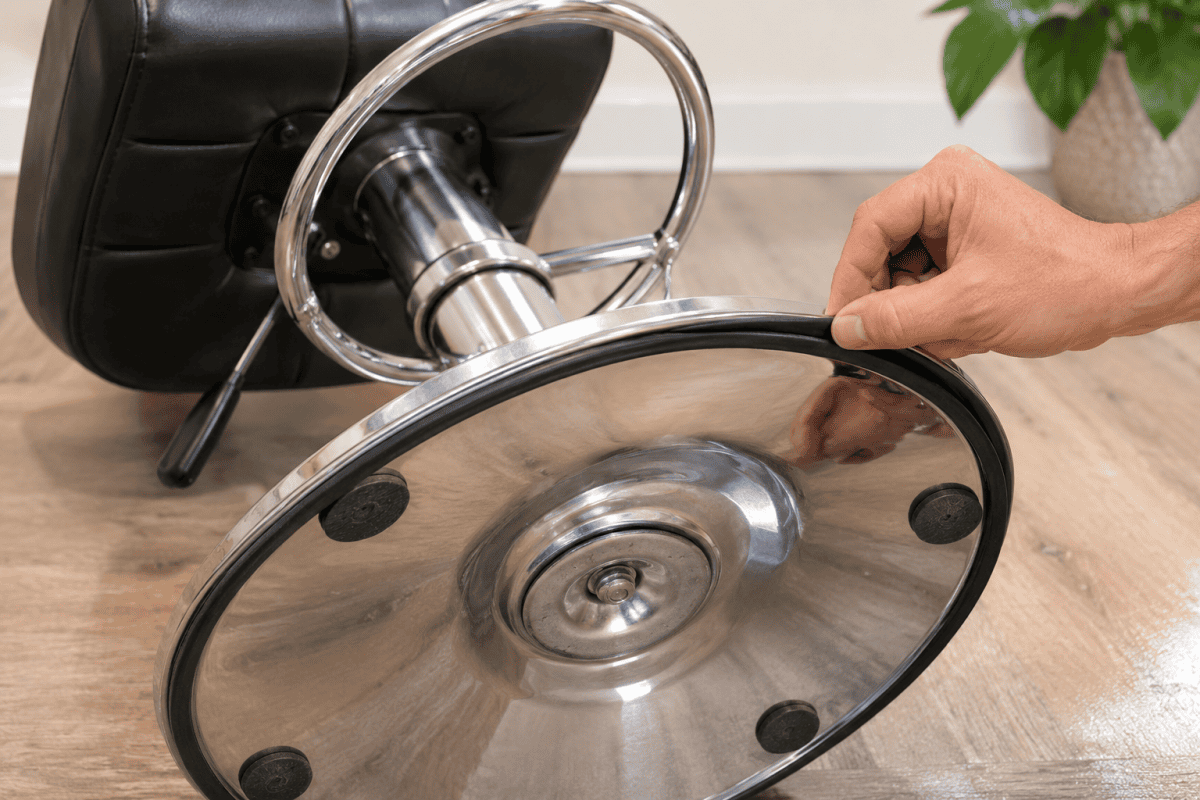
Turn the stool on its side on a protected surface and examine the underside. Many pedestal-style stools have a rubber or plastic ring around the base; other designs use separate pads. A missing, folded, or uneven protector can make the stool rock and scratch the floor.
- Remove dirt or debris trapped under the base.
- Reseat a loose protective ring if it is intact and designed to snap into place.
- Replace torn, missing, or badly worn pads or rings with compatible parts.
Do not use the stool until the base sits securely and evenly.
3. Check the Connection Between the Base and Center Column
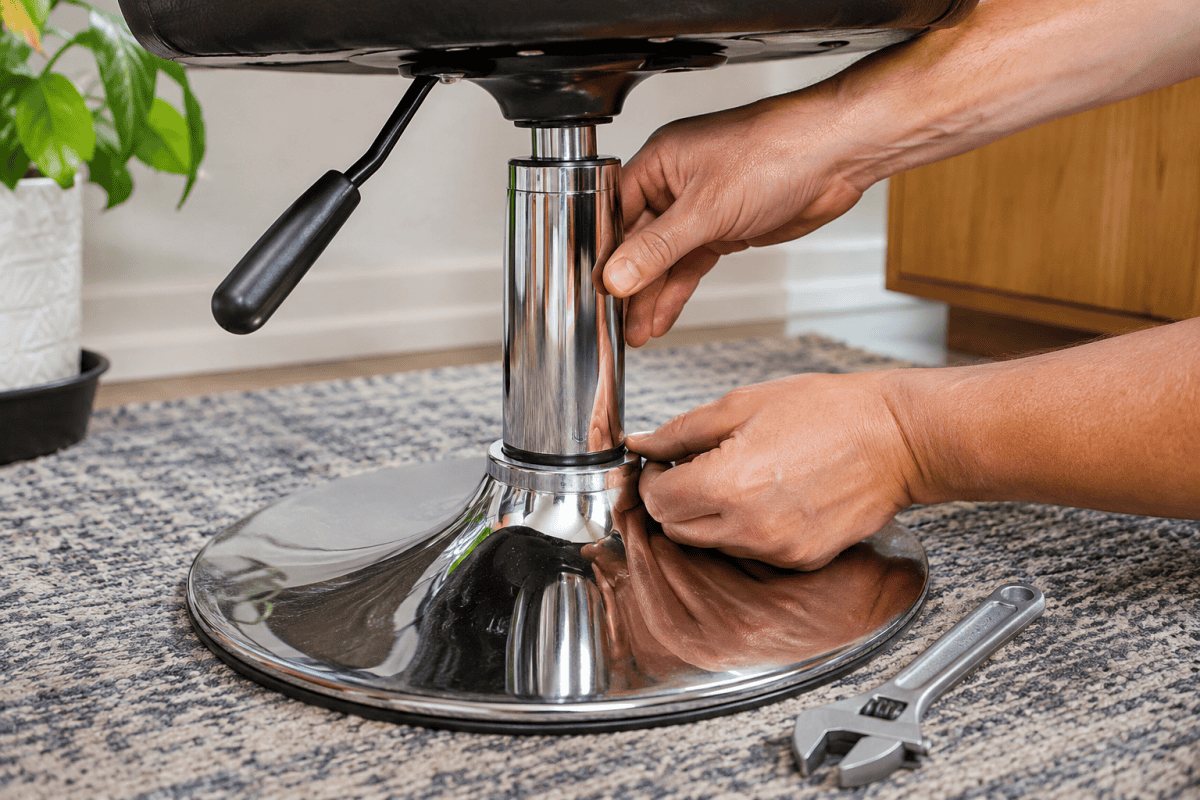
Hold the base steady and gently check for movement where the center column meets it. Some stools have accessible bolts that can be tightened with the manufacturer’s recommended tool. Others use a tapered, press-fit connection and do not have serviceable bolts.
Tighten only fasteners that are clearly intended to be adjusted, following the manufacturer’s instructions. Do not glue the column into place or attempt to repair a cracked weld. If the base, column, or weld is damaged, replace the approved component or the stool.
4. Examine a Loose Footrest Bushing or Sleeve
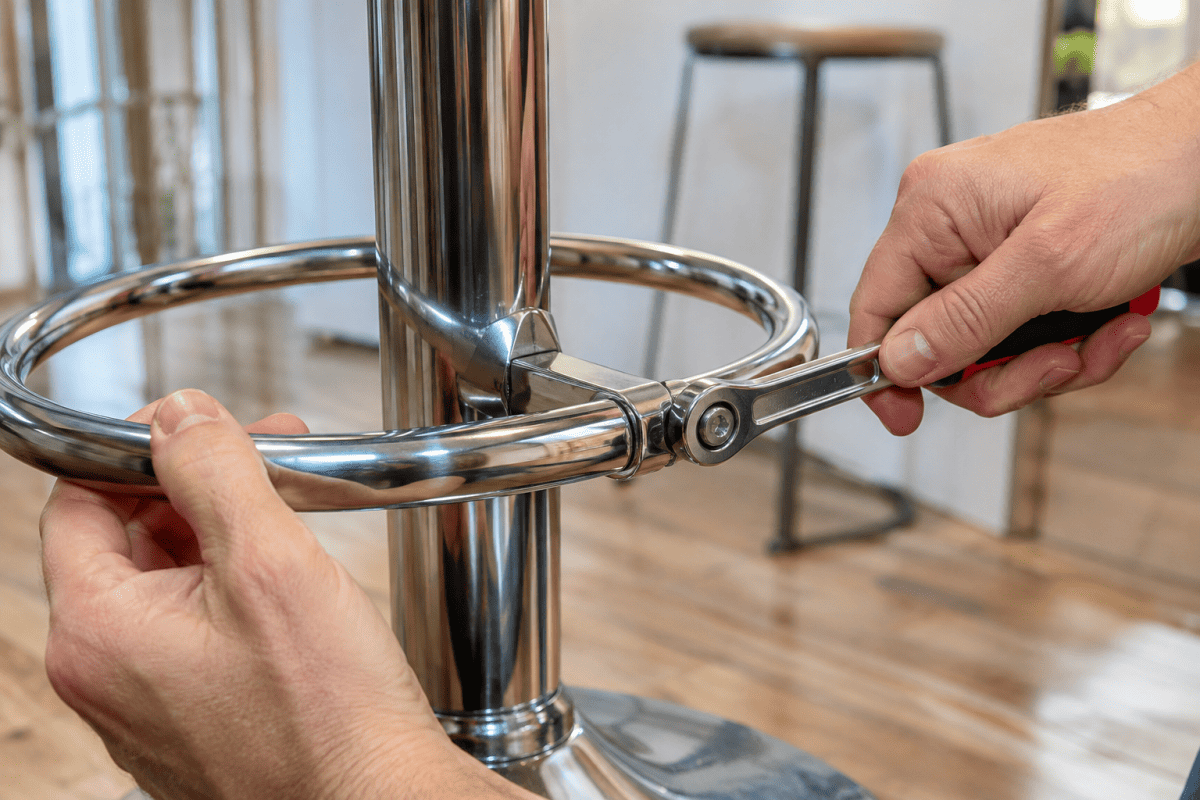
Some hydraulic stools have a plastic bushing or trim sleeve around the column near the footrest. If this part becomes loose, it can rattle or make the footrest feel unstable. Inspect it for cracks, wear, or missing retaining pieces.
If the manufacturer offers a replacement bushing, use that part. Avoid applying glue or silicone inside moving or height-adjustment components: adhesive can interfere with normal movement and make later repairs difficult. If the footrest itself is structurally loose, stop using the stool until it is repaired correctly.
5. Tighten Loose Fasteners on Four-Legged or Wooden Stools
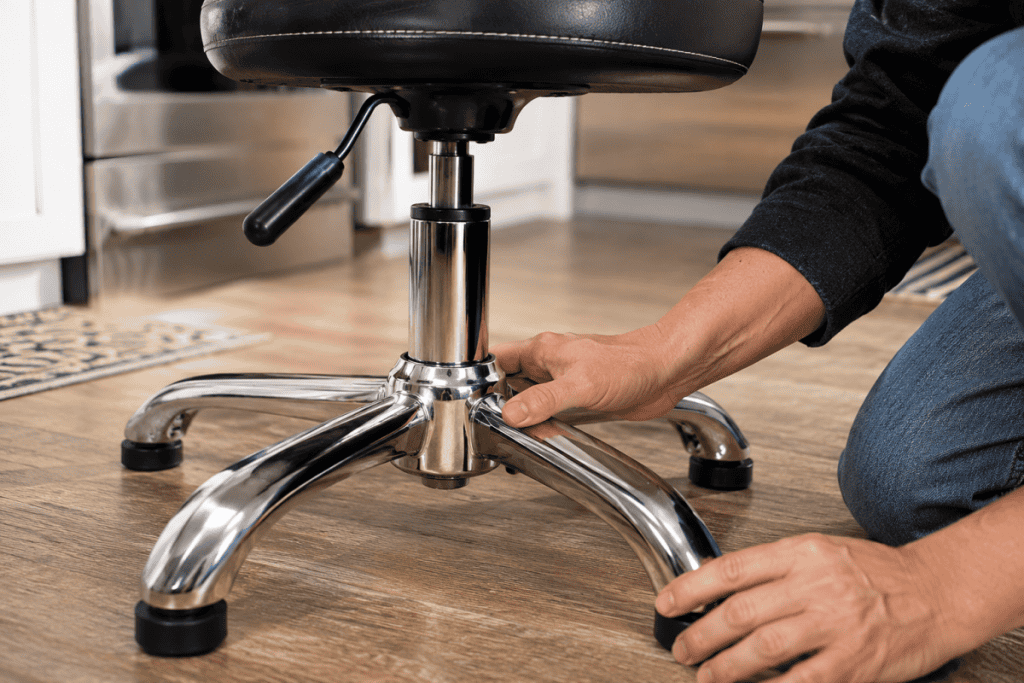
Not every wobbly bar stool has a pedestal base. On wooden or four-legged models, screws and bolts can loosen with repeated use. Place the stool on a level floor and inspect the joints.
- Check for cracked wood, bent metal, or missing hardware before tightening anything.
- If the frame is sound, loosen the relevant assembly bolts slightly so the parts can settle into alignment.
- Align the legs and seat, then tighten the bolts evenly according to the assembly instructions.
If a joint remains loose, a leg is damaged, or a screw no longer holds, do not rely on overtightening to fix it.
6. Tighten the Screws Beneath the Seat
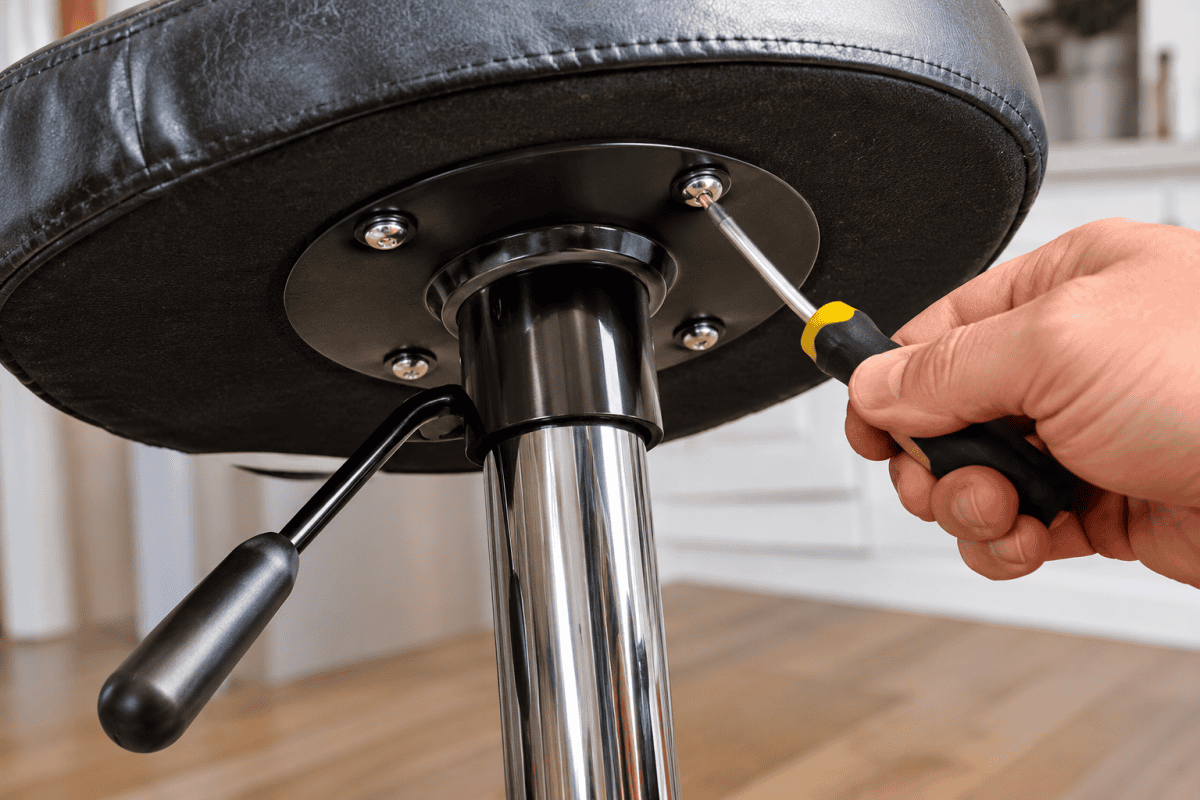
If the base stays steady but the seat moves, the seat mounting screws may be loose. Carefully tip the stool to access the underside, then check the fasteners connecting the seat to its support plate.
Center the seat, tighten the accessible screws evenly with the correct screwdriver or Allen key, and check that no fastener is stripped or missing. Test the seat gently before using it again. If the mounting plate is cracked or the seat still shifts, replace the damaged part.
What If the Bar Stool Swivels Too Freely?
Swiveling and wobbling are different problems. A swivel stool is designed to rotate, and many models cannot be safely locked in place. First check whether the manufacturer provides a compatible swivel-lock feature or replacement mechanism.
Do not drill through the swivel plates, wedge the mechanism, or tape moving parts together. Those alterations can damage a load-bearing connection. If you need a non-swiveling stool, choose a model designed to remain stationary.
When Should You Replace the Gas Lift or the Entire Stool?
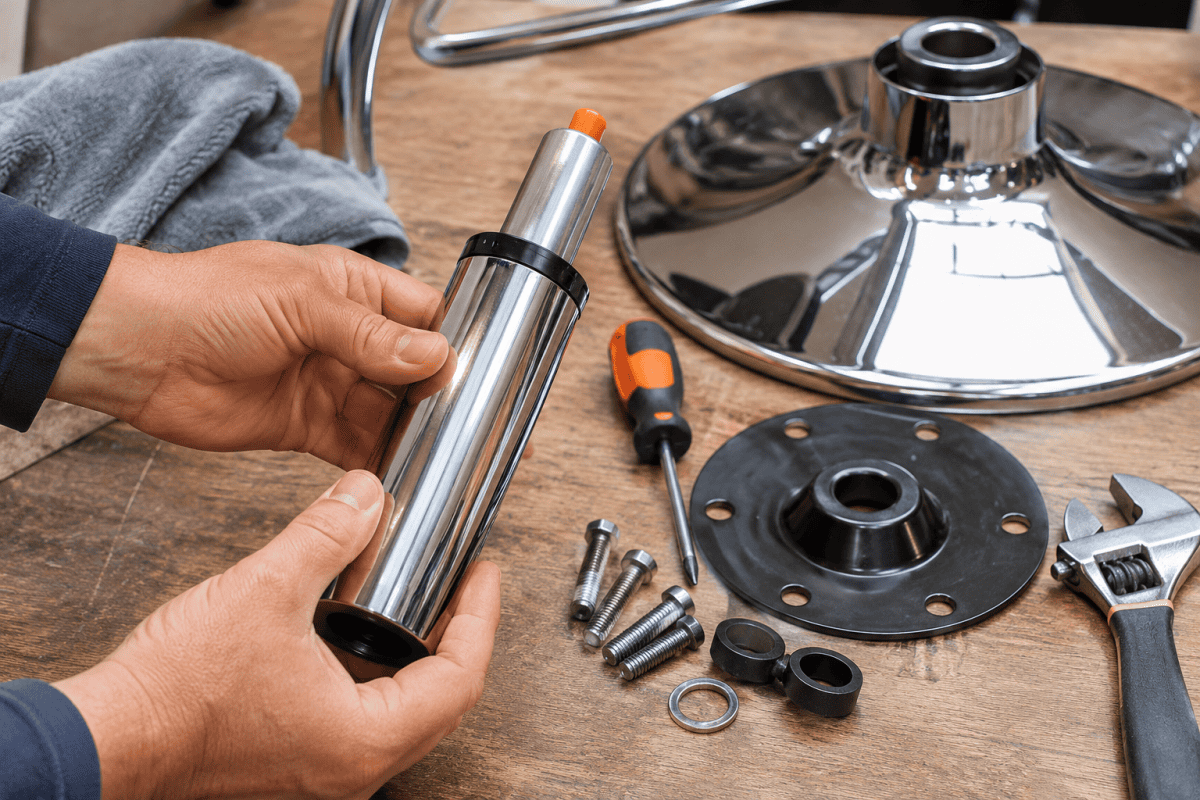
A stool that slowly sinks, will not hold its height, leans at the gas-lift column, or has a cracked base needs more than tightening. Look up the manufacturer’s replacement instructions and confirm that any replacement cylinder is compatible with the stool. Gas-lift cylinders are pressurized: do not open or puncture them. If compatible parts are unavailable or the frame is damaged, replacing the stool is the safer choice.
Check Stability After a Repair
Before anyone sits down, put the stool on a level, firm surface and check that the base or all feet contact it properly. Confirm that the specified fasteners are secure, the seat is attached correctly and no parts are cracked or bent. Follow the model’s assembly instructions; do not add improvised spacers inside the gas-lift connection.
Only return the stool to use when it stands securely. If it still rocks, leans or sinks, stop using it and contact the manufacturer about compatible parts or replacement. Do not open, heat, puncture or attempt to repair the pressurized gas cylinder.
Frequently Asked Questions
Why does my hydraulic bar stool wobble even after I tighten the screws?
Check the floor, base protector, column-to-base connection, and seat mounting plate. A damaged base or gas lift will not be fixed by tightening screws.
Can I fix a bar stool that keeps sinking?
A sinking seat often indicates a worn gas-lift mechanism. Consult the manufacturer about a compatible replacement cylinder; do not attempt to repair the pressurized cylinder itself.
Is it safe to use a wobbly bar stool?
Not until you know the cause. Minor movement from an uneven floor may be easy to correct, but a cracked base, bent column, or loose structural joint can cause a fall.
For a related repair question, see Can Bar Stools Be Regassed?
Sources:
www.atlanticshopping.co.uk/inspiration-and-advice/how-to-fix-a-wobbly-bar-stool
www.lakeland-furniture.co.uk/blog/guide-fix-wobbly-bar-stool
www.barstoolcomforts.com/blog/2018/05/how-to-lock-a-swivel-seat-so-it-doesnt-swivel
www.hibarstools.com/how-do-you-stop-a-swiveling-bar-stool
www.findanyanswer.com/how-do-you-stop-swivel-bar-stools-from-swiveling