
Cedar chests are used for attractive covered storage, their aromatic wood, family keepsakes, and furniture that can remain useful for years. A well-chosen chest can hold ordinary clean, dry bedding and seasonal items. Cedar does not guarantee pest protection, prevent moisture damage, or make the chest suitable for every heirloom.
Some chests are made largely from cedar; others have a different exterior wood or veneer with cedar lining inside. Check the actual construction, usable storage space, lid hardware, and intended use before choosing one. The room and care pictures below are illustrative examples.
Check an Older Chest’s Lock Before Using It
If you own or are buying a vintage chest, read the CPSC notice for recalled Lane and Virginia Maid cedar chests. It covers older automatically latching locks, including chests made between 1912 and 1987. The notice currently says replacement locks are unavailable and urges owners to completely remove the recalled locks. Follow that guidance rather than relying on an old offer of a replacement kit.
Check the brand and model, keep children from entering a chest, and address heavy lids or failed supports before use. A lid that stays open for a photograph is not proof of a safe lid-support system. Do not use an ordinary cedar chest as a toy box.
What a Cedar Chest Does—and Does Not Do
| Reason to choose one | Useful benefit | Limit to remember |
|---|---|---|
| Well-built storage | A sound case can remain useful with care | Cedar can still move, split, dent, or suffer damage |
| Appearance | Wood grain and finishes suit many rooms | Cedar lining does not identify the exterior wood |
| Seasonal storage | Keeps appropriate items together and covered | Scent is not an infestation treatment |
| Practical value | May reuse furniture you already own | Resale value and restoration costs vary |
| Family history | A meaningful piece can pass between generations | Fragile originals may need separate archival storage |
| Room function | Can store bedding near where it is used | Seating and tabletop loads need specific approval |
| Reuse and sourcing | Keeping sound furniture in use avoids replacement | A wood species name alone is not sustainability evidence |
1. A Well-Built Cedar Chest Can Be Durable
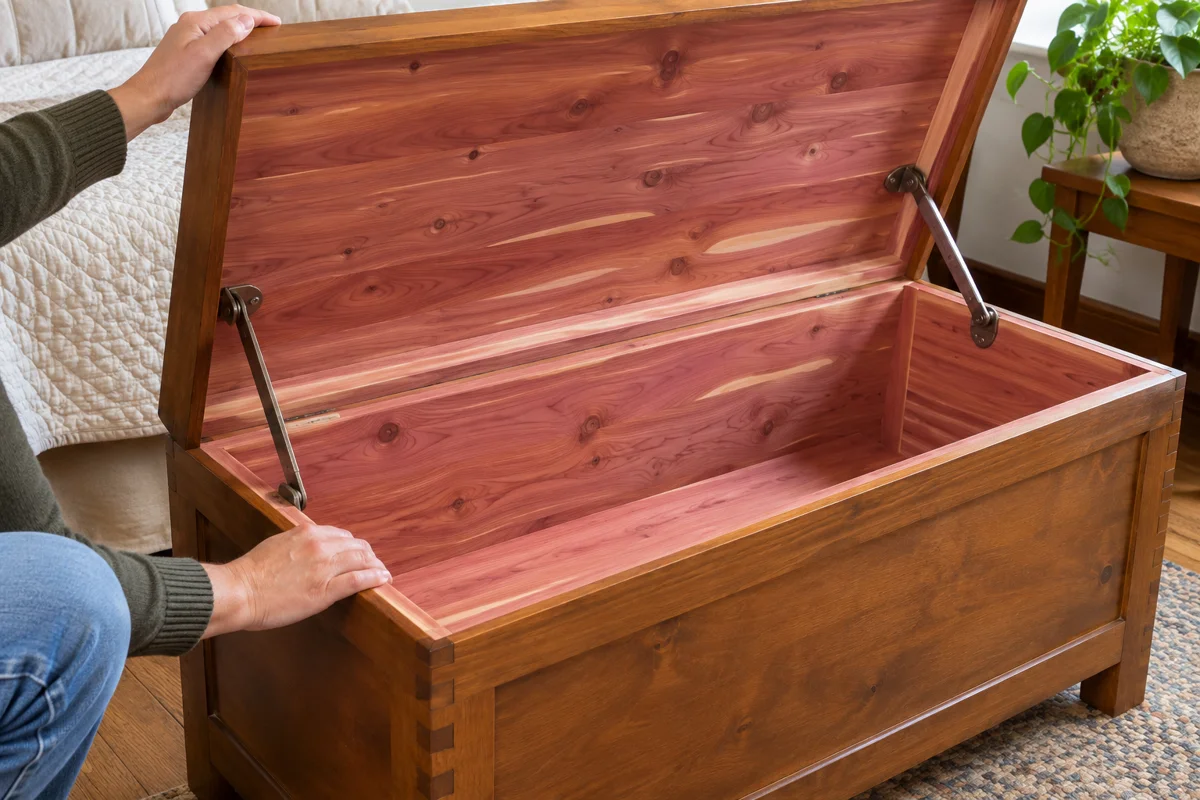
A sound chest provides a rigid container for household storage. Examine its corner joints, bottom, feet, hinges, and lid supports. These construction details, along with how the chest has been used and stored, matter more than a promise that cedar lasts indefinitely.
Cedar is still wood. It can change dimensions with moisture, and a chest can develop cracks, loose joints, or warped parts. The USDA Forest Products Laboratory explains how moisture changes affect wood dimensions. Keep the piece in a reasonably stable indoor environment, away from leaks and direct heating sources.
Do not load a weak bottom or use a damaged lid while deciding how to repair it. On a used piece, musty odors, stains, softened wood, or loose joints warrant further assessment; a strong cedar smell does not establish good condition.
2. Cedar Chests Offer Warm Grain and Flexible Styling
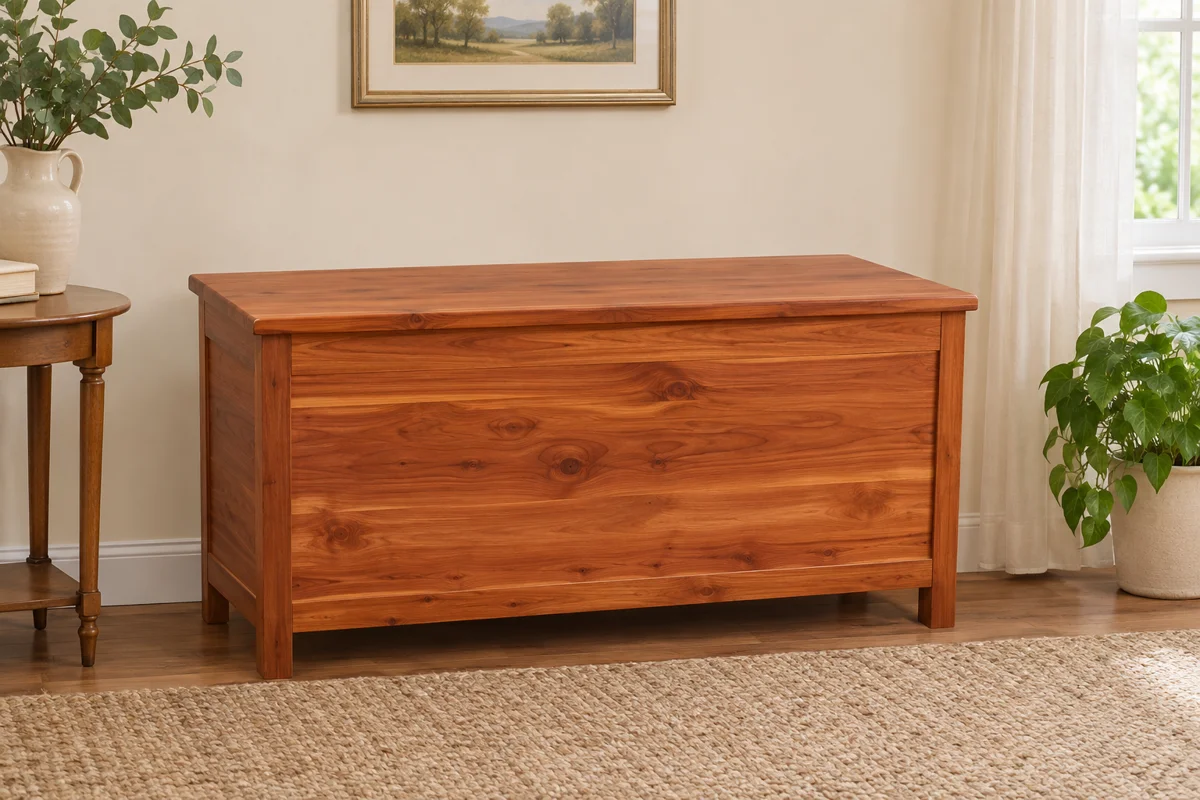
A chest can add warm wood tones without a large cabinet or tall shelving unit. Styles range from simple rectangular blanket chests to decorative veneered pieces. Choose the shape, finish, and outside dimensions that suit the room rather than assuming all cedar chests have the same rustic look.
Many aromatic linings are left unfinished, but check the maker’s care instructions. The exterior may be stained, painted, veneered, or coated differently. Treat the outside finish and inside lining as separate surfaces when cleaning or considering restoration.
Avoid sanding first and asking questions later. Thin veneer, decorative surfaces, old coatings, labels, and original details can be damaged or lost. A furniture conservator or qualified restorer can help assess an important antique before refinishing.
3. They Provide Covered Storage for Suitable Seasonal Items
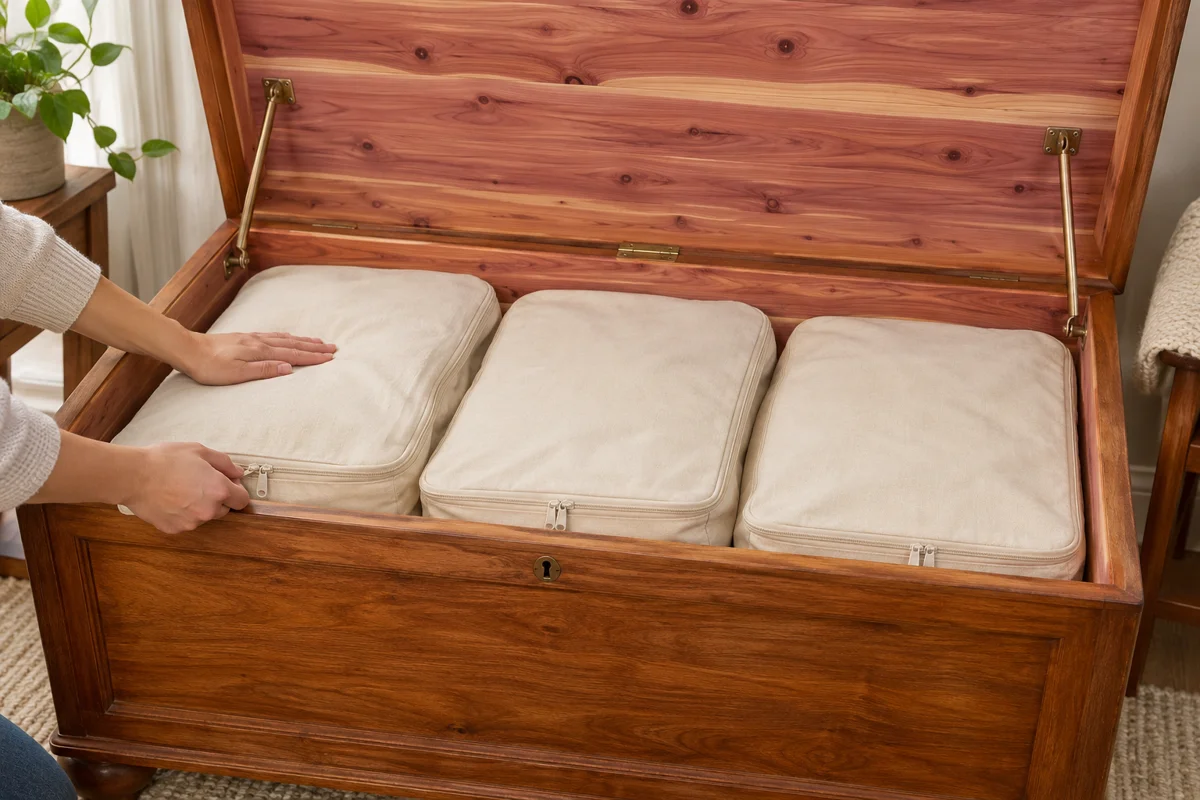
A chest can organize ordinary spare bedding, washable throws, and other suitable seasonal textiles. Store them clean and completely dry, avoid overpacking, and inspect the contents periodically. Keep fabric separated from bare wood using an appropriate storage method.
The aromatic scent is not a guarantee against moths or carpet beetles. UC IPM explains that cedar oil has limited effects on clothes-moth larvae and that tight construction is more important over time than the wood alone. A chest cannot make already-infested clothing pest-free.
If you find webbing, larvae, fresh damage, or unidentified insects, separate the affected items and seek identification and care-compatible treatment advice. Do not add scented oils or pesticides to the chest as a substitute for that work.
Cotton bags or a clean cloth barrier can help keep everyday bedding off the wood, but they are not airtight pest barriers or protection against all vapors. For valuable textiles, use the more protective storage guidance below.
4. A Chest Can Offer Practical Value Without Being an Investment
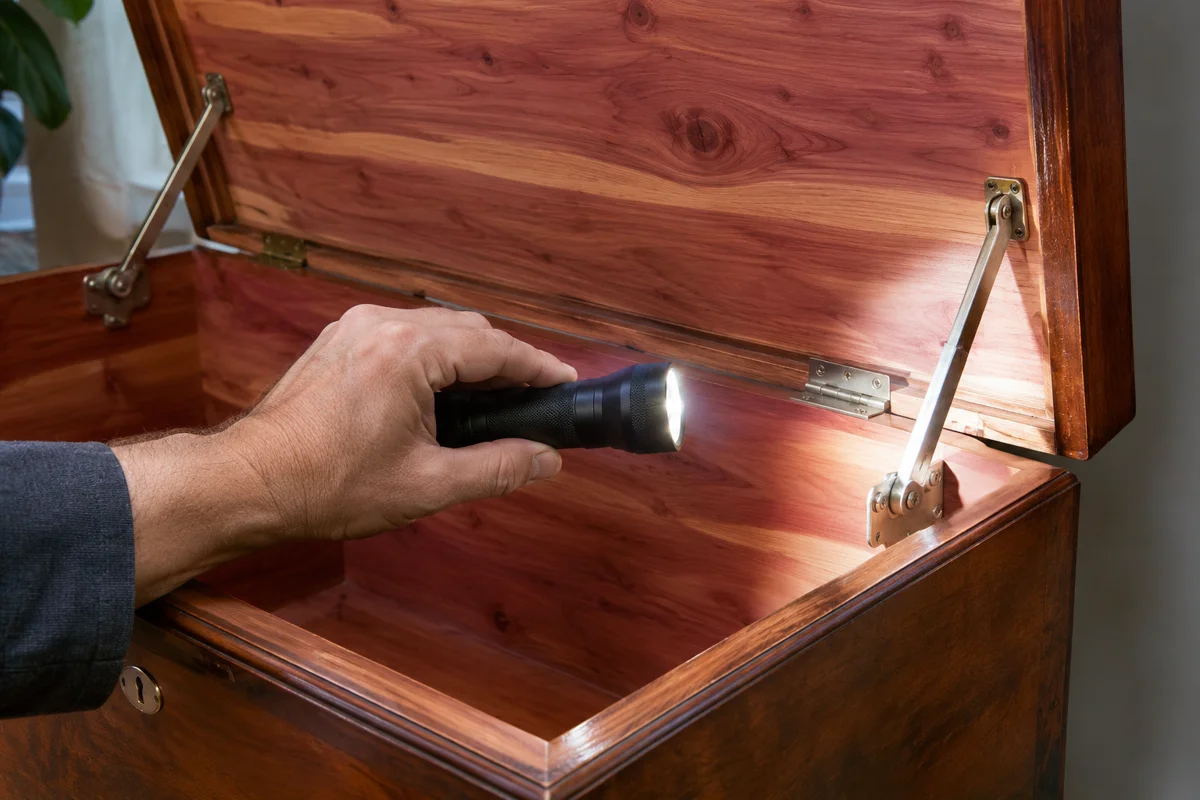
Reusing a sound chest may give you useful storage without another purchase. If buying secondhand, compare the asking price with its condition, transport cost, any necessary repairs, and the space you can actually use inside.
Cedar chests do not have a guaranteed resale value. Maker, design, rarity, originality, condition, local demand, and sale costs all affect the result. A refinished piece is not automatically worth more than an untouched one.
Check hinges and lid supports, the lock and recall status, damaged feet, lifting veneers, and the bottom’s condition before negotiating. If a seller calls it an investment or an antique, ask for evidence rather than treating age or scent as proof of value.
5. They Can Carry Family History
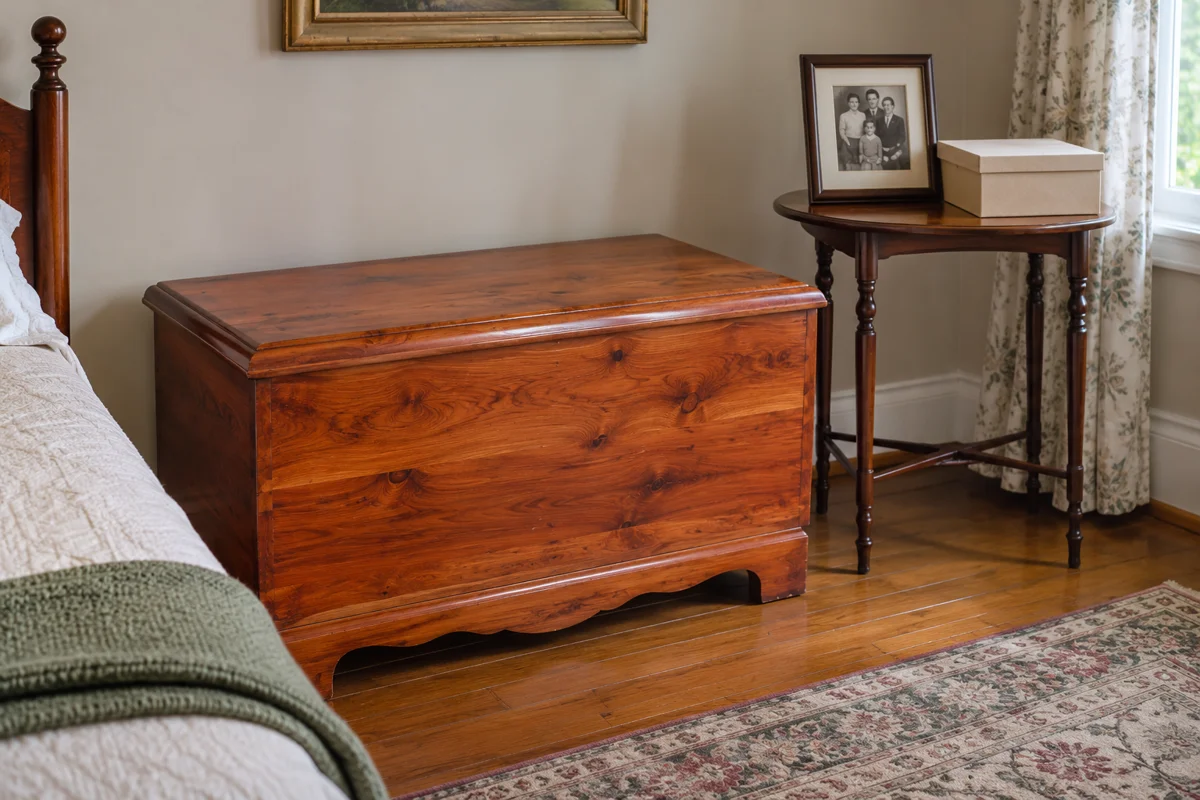
A family chest may be valued for the person who owned it, a wedding gift, or the household objects it once held. Recording those stories can matter more than restoring it to a new-looking finish. Photograph labels and details and keep a copy of the family history separately.
Hope chests belong to a broader tradition of household and marriage chests. The Metropolitan Museum of Art describes Renaissance Italian cassoni used for clothing, fabrics, and valuables. Its illustrated example is walnut, which is a useful reminder that historic marriage chests were not all cedar.
That history does not establish an uninterrupted cedar-chest tradition from ancient Egypt to a particular modern piece. Judge historical claims against documentation for the object, rather than assuming all chests called hope chests share the same origin or material.
An heirloom chest also need not hold the most fragile heirlooms. Old photographs, important papers, wedding gowns, and historic quilts may be better stored elsewhere in materials selected for their preservation needs.
6. They Can Combine Storage With a Room Function
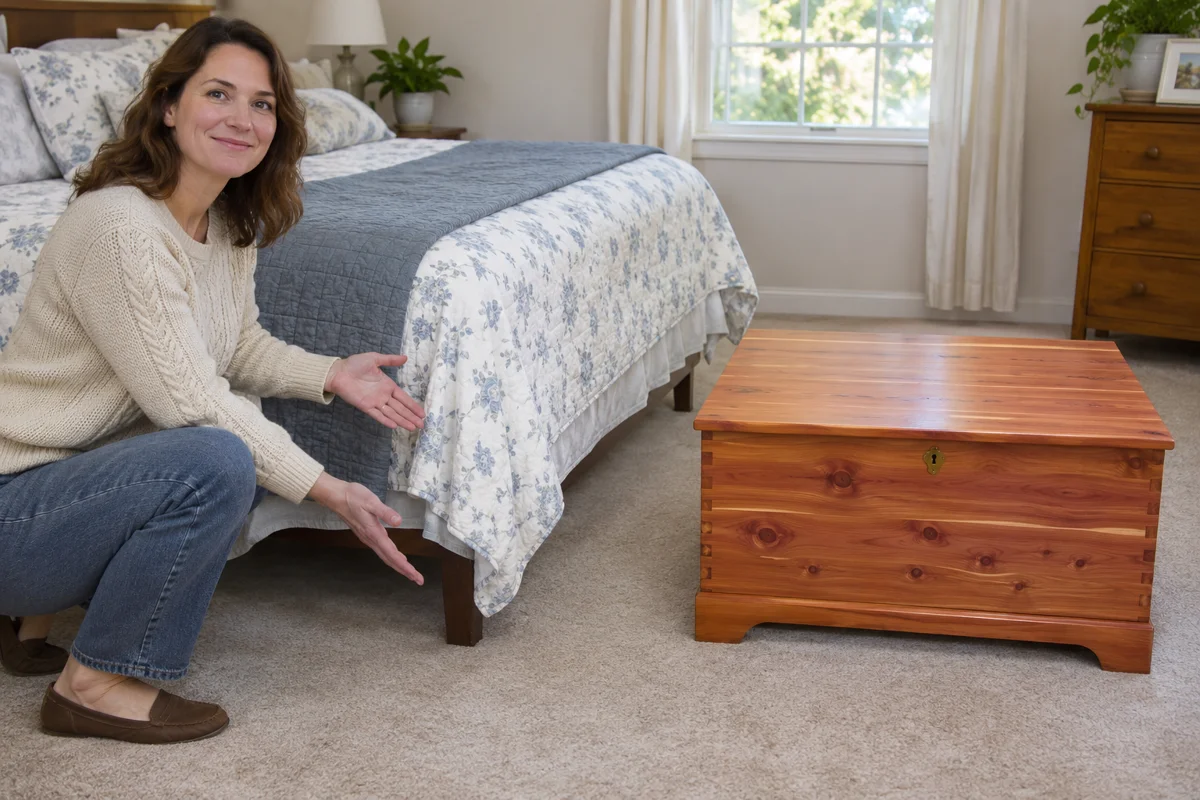
At the foot of a bed, a chest can hold spare bedding near where it is used. In a living room, an appropriately designed piece may provide a low surface as well as storage. A smaller chest can sometimes fit beside a bed, provided it has a practical height and does not block access.
Do not assume a sturdy-looking chest is a bench. Use it for seating only when the manufacturer explicitly permits that use and the lid, supports, joints, and feet meet the specified load. An antique without a known rating needs professional assessment rather than an improvised cushion.
For tabletop use, check the allowed load and protect the finish as its maker recommends. Heavy glass, hot cups, water rings, and objects that must be moved every time you open the lid can make the arrangement less practical.
Measure the full outside footprint, the lid’s opening path, and the walking route. As a hypothetical example, adding a 20-inch-deep chest to a 36-inch strip at the foot of the bed leaves only 16 inches where the two overlap. Measure the actual room rather than choosing the chest from its width alone.
7. Keeping a Suitable Chest in Use Can Reduce Replacement
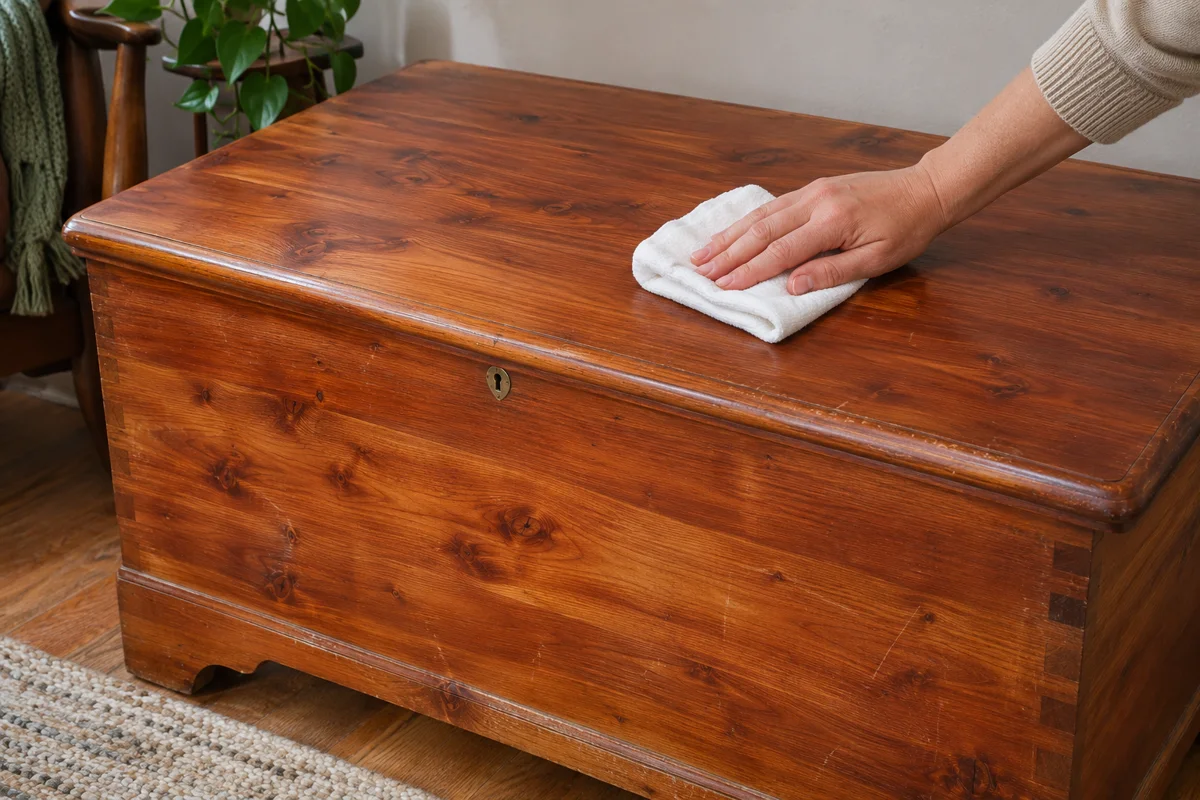
A chest you already own may continue to serve well with appropriate care and repairs. Buying a sound used piece is another way to use existing furniture. Its practical suitability and safety still come first.
Cedar is not automatically sustainable because it is wood. The source, species, forest management, manufacture, transport, finishes, and useful lifespan all matter. There is no universal rule that every harvested cedar is replaced by three trees.
For a new chest, ask for specific sourcing or certification information rather than a vague “eco-friendly” label. For an existing chest, avoid unnecessary refinishing and repair only in ways appropriate to its construction. Mixed materials, coatings, and hardware also complicate claims that the whole item will simply biodegrade.
What Should You Store in a Cedar Chest?
| Contents | Practical approach |
|---|---|
| Ordinary modern blankets and bedding | Clean and dry first, separate from bare wood, allow easy inspection |
| Seasonal woolens | Inspect for pests, clean according to the garment label, use suitable protective storage |
| Historic quilts, lace, or wedding textiles | Prefer conservation-quality storage away from cedar; seek a textile conservator for fragile items |
| Original photographs and important papers | Use appropriate archival enclosures in a suitable separate environment |
| Damp, dirty, or pest-affected items | Resolve the problem before storage; cedar scent is not a treatment |
| Toys accessible to children | Use purpose-designed safe toy storage; an ordinary cedar chest is unsuitable |
For valuable textiles, North Carolina Historic Sites advises against direct contact with wood, including cedar chests. Separating an item from the wood does not necessarily isolate it from the chest’s internal environment.
The Canadian Conservation Institute’s textile-care guidance explains appropriate storage materials and the limited effectiveness of cedar vapor. Choose enclosures for the particular textile; an “acid-free” marketing label alone does not make any box suitable for every heirloom.
Buying and Care Checks Before You Choose One

Measure usable inside length, width, and depth as well as the exterior. Lid supports, a tray, a thick lining, or a curved top can reduce usable capacity. Allow room to take out a bag without dragging it over fittings.
A hypothetical inside space 38 inches long, 16 inches deep, and 15 inches high will not accept a rigid 40-inch-long storage box flat, even if the chest’s outside width is 42 inches. Compare the actual folded bedding or storage-container dimensions with the interior.
For new or used chests, check lid control, pinch points, lock type, recall status, base strength, surface condition, odor, delivery access, and any stated seating or storage load. Do not choose generic replacement lid hardware by appearance; it needs to match the lid’s weight and geometry and the maker’s requirements.
Natural buying opportunities are correctly sized textile bags and appropriate preservation enclosures, rather than extra cedar oils sold as a cure-all. Compare usable dimensions, materials, closure, cleaning, and intended contents. For valuable objects, get preservation advice before purchasing supplies.
Follow the chest maker’s cleaning instructions. Do not saturate the lining, spray oils onto stored fabrics, or sand an unknown finish merely to intensify the smell. More scent does not establish more pest protection.
Frequently Asked Questions
Will a Cedar Chest Keep Moths Out?
Not reliably by scent alone. Clean, pest-free contents, suitable closed storage, sound construction, and periodic inspection matter. Cedar will not eliminate every stage of an existing infestation.
Can You Store a Wedding Dress in One?
A sentimental dress deserves storage chosen for its fabric, dyes, trims, and condition. Cedar is not automatically preservation-safe. Prefer suitable conservation-quality storage separately and consult a textile specialist for valuable or fragile garments.
Can You Sit on a Cedar Chest?
Only if that particular chest is intended and rated for seating and remains in sound condition. A flat lid, thick wood, or short feet does not establish a safe seating load.
Does Sanding Restore All the Benefits?
No. Sanding may affect aroma on some unfinished linings but does not guarantee pest control, restore structural strength, or resolve an unsafe lock. Check the finish and care instructions before any abrasion; important antiques need specialist advice.
Related Room-Planning Guides
Before placing a chest at the foot of a bed, see our bedroom footprint and clearance examples. If you need to free sleeping space, our twin-bed guide explains why nearby storage furniture does not extend a mattress.