
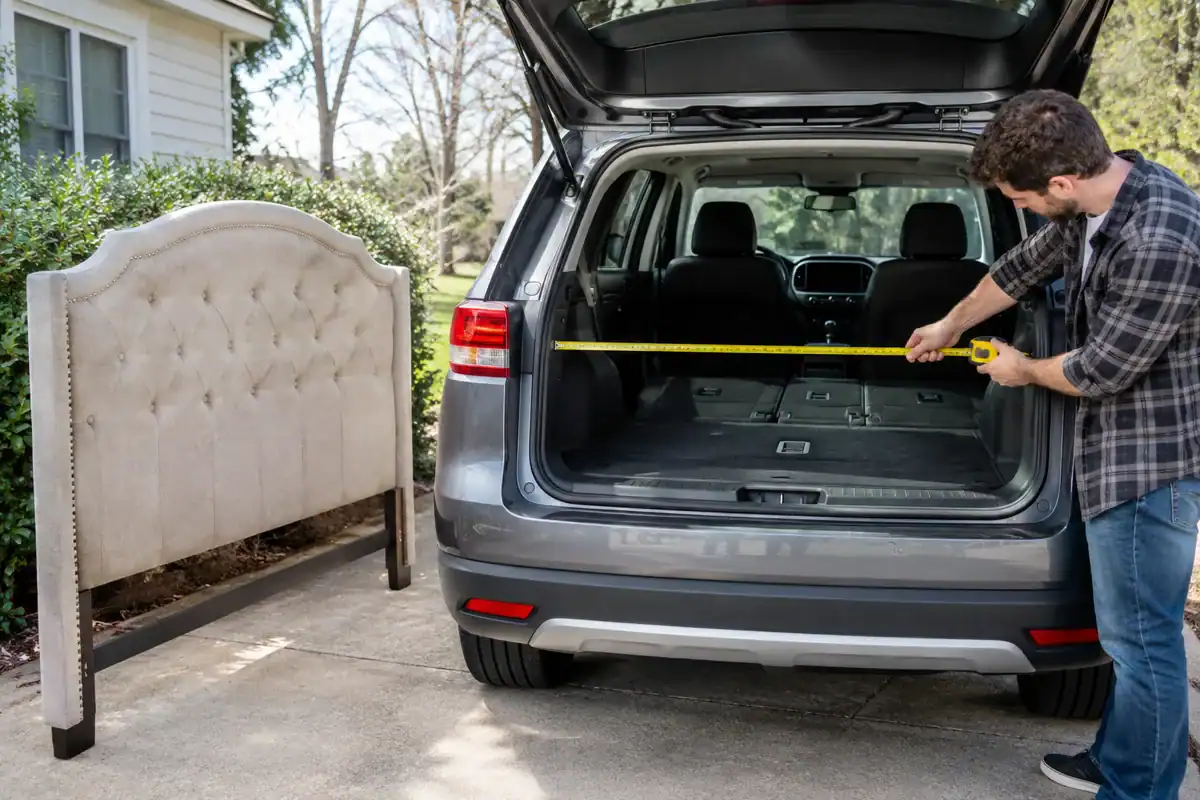
A queen headboard may fit in an SUV, but the answer depends on the headboard and the vehicle’s usable cargo space. Measure the rear opening, the space inside with the seats folded, and the headboard itself before arranging pickup. A vehicle’s exterior width and length do not tell you whether furniture will pass through its hatch.
What to Measure Before You Pick Up a Headboard
Ask the seller for a photo with a tape measure across the widest part, then another showing the height and thickness. Confirm whether the measurements include the legs or shipping carton. If parts are designed to detach, ask for the dimensions of the largest remaining section; do not assume an upholstered wing or glued joint can be removed.
| Measure this | Include these details | Why it matters |
|---|---|---|
| Headboard or package | Outside width × height × thickness; posts, wings, trim and any box | A queen mattress width does not tell you the headboard’s outside size. |
| Hatch opening | Narrowest clear width and height, allowing for trim and the curved top | The piece must pass through this opening before floor space matters. |
| Cargo floor | Width between wheel arches and length behind the front seats in normal driving positions | Seats, wheel arches and rigid projections reduce usable space. |
| Turning path | Hatch slope, headliner, seat backs and headboard thickness | A diagonal that looks long enough may still leave no room to turn. |
| Protection and closure | Padding, corner protectors, restraints and the closed hatch | A bare measurement match leaves no margin for a safe, protected load. |
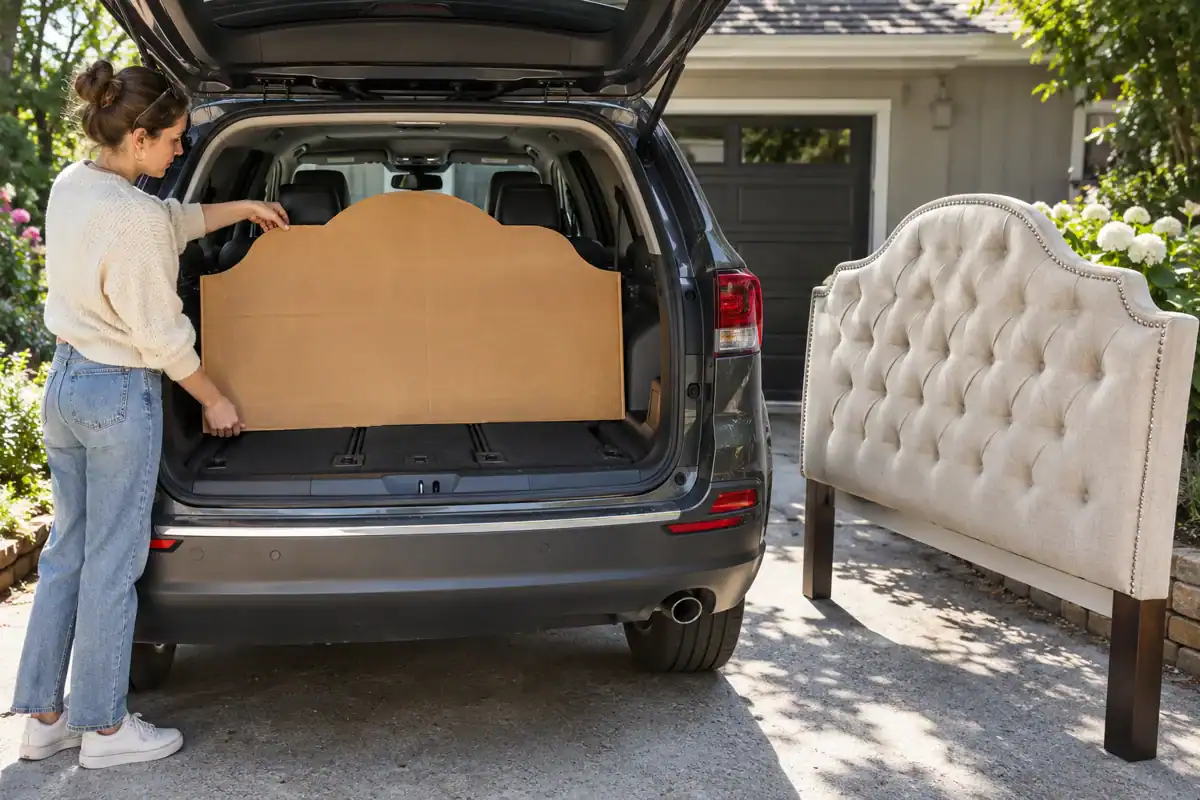
A cardboard template matching the headboard’s outline can help you test a tight opening before pickup. Thickness still matters: a flat template cannot prove that a padded or curved headboard will fit.
How to Check Whether It Will Fit
1. Measure the complete piece. Ask the seller for its actual dimensions and whether legs or brackets are removable under the assembly instructions. Do not assume every queen headboard has the same width.
2. Prepare the cargo area. Follow the vehicle manual when folding seats. Remove loose items and protect the interior with a blanket. Keep the driver’s seat in a safe driving position.
3. Compare the opening and the space inside. The headboard must pass through the hatch and sit completely inside. A wide cargo floor is of little use if the opening is too narrow.
4. Check the loading angle. A piece may fit on its side or at an angle, but check the whole path. Do not rely on a diagonal measurement alone: corners, padding and thickness can stop it turning.
5. Confirm the hatch closes. Leave room for padding and restraints rather than planning a fit with no clearance.
Example: The Cargo Floor Is Wide Enough, but the Hatch Is Too Narrow
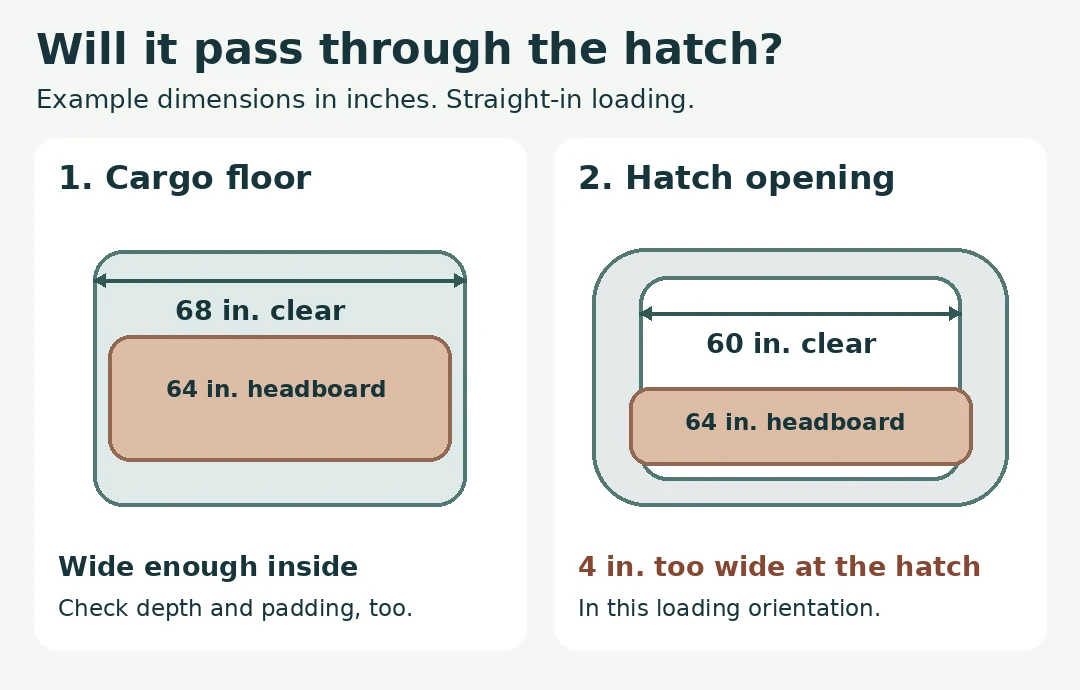
Say the seller measures the headboard at 64 inches across its widest point. Your SUV has 68 inches of usable cargo-floor width where the headboard would sit, but only 60 inches of clear hatch width at the height where it would pass through. The headboard is 4 inches too wide to go in straight across, even though the cargo floor is wide enough.
If you’re considering an angled load, check the full turning path with the headboard’s height, thickness and padding in mind. If you can’t verify the fit and close the hatch normally, arrange a larger vehicle or delivery before pickup.
Can You Rely on an SUV Model List?
Use measurements for your vehicle’s model year and seat configuration as a starting point, then measure your own SUV. Trim, seat position and the headboard’s shape can change the result. Exterior dimensions and advertised cargo volume are not substitutes for opening dimensions.
Protect and Secure the Headboard
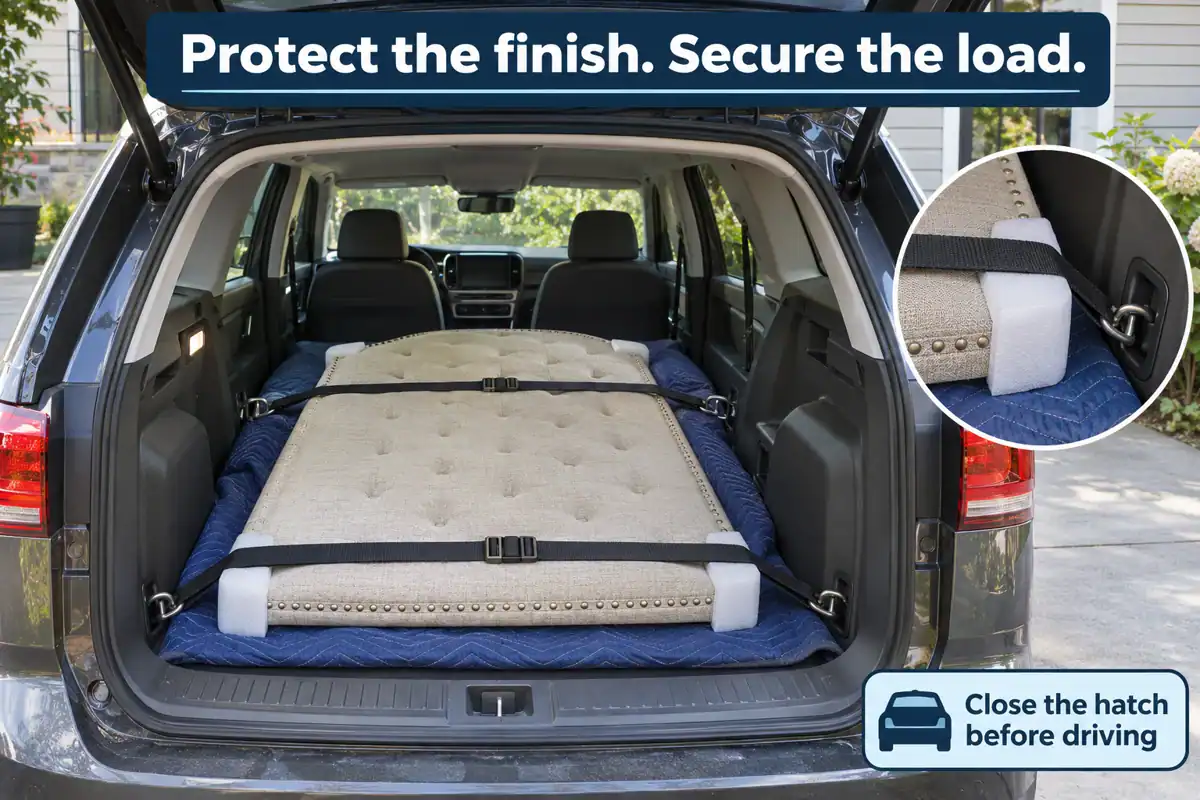
Wrap the finish and cushion the corners. Use suitable cargo restraints and the vehicle’s designated securing points, following its manual and load limits. Keep the headboard away from driving controls and avoid obstructing the driver’s view. Do not let a passenger hold it in place.
If the hatch cannot close or the load cannot be secured properly, choose a larger vehicle or delivery. An open hatch can introduce exhaust fumes and creates additional load-security problems.
What to Do If It Does Not Fit
Do a final pickup check: bring the measurements, a tape measure, padding and suitable restraints. Inspect the piece for damage before loading, keep removed hardware in a labeled bag, and arrange enough help for the weight. If the real piece differs from the seller’s measurements, stop and recheck rather than forcing it past the hatch trim.
Ask about store delivery, hire a suitable van, or arrange a furniture mover. A headboard that comes apart may be easier to transport, but only remove parts intended for disassembly and keep the hardware together.
Still choosing the piece? Our guide to headboard alternatives may help you find an option that suits the room and is easier to bring home.